
About this episode
If you’ve been waiting for the perfect moment to pursue an idea you have, this episode is your permission slip to begin. At 20 years old, Kostapanos Miliaresis pitched a 60-second idea that became one of Greece’s largest volunteer networks, eventually earning him Forbes 30 Under 30 recognition and partnerships with Fortune 500 companies.
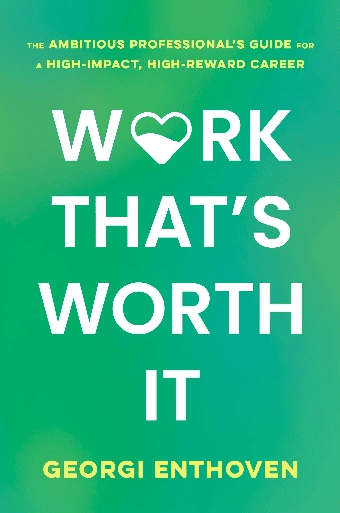
Ready to love your Mondays? Buy ‘Work That’s Worth It’ now – Amazon, B&N, Bookshop.org OR, need more convincing? Get the first chapters FREE here.
SHARE THIS EPISODE


20 Jan 2026
SEASON 1, EPISODE 44
Show Notes
In this conversation, Kostapanos shares why clarity comes from action (not analysis), how to know when to let go of something you’ve built so it can grow bigger, and why the sooner you remove yourself from a solution, the more impact it can have.
You’ll also hear his framework for focusing on lead indicators (what you control) versus lag indicators (outcomes), and how he thinks about curating an inner circle that lets you be your full self.
Resource link:
Kostapanos Miliaresis
Keep Going:
💚 Got feedback on this episode? Email the host, Georgi Enthoven: info@georgienthoven.com
💚 Want more content? Get the full show notes & bonus content on YouTube: www.youtube.com/@GeorgiEnthoven
💚 Ready to begin transforming your career today? Start with Georgi’s bestselling book “Work That’s Worth It” – grab your FREE preview or BUY the full book today!
💚 Connect with Georgi Enthoven on Instagram (instagram.com/georgienthoven); LinkedIn (linkedin.com/company/georgienthoven)
Facebook (facebook.com/georgienthoven)
Website: www.georgienthoven.com
Transcription
Kostapanos: [00:00:00] Clarity comes from Accion, not from, you know, over analysis. So where you are with what you have, what’s the first thing that you can do and that would end up bring you closer to achieving an impact and making it sustainable. Don’t try to find all the solutions in advance because that’s not usually the case.
Like the more you are, the more people you meet, and that’s the more solutions are being created for things for you to work out.
Georgi: Did you know the average person will work 90,000 hours in their lifetime? What if you could use those hours to find fulfillment and become a disruptor for good? Welcome to the Work That’s Worth It.
Podcast. I’m Georgi Enthoven, and I’m here to demonstrate that. And an ambitious, meaningful, and rewarding career is not just a dream, it’s achievable. Each episode will dive into conversations with global change makers who crack the code on combining income and impact. If you’ve ever felt like you were torn between a paycheck and your purpose, or maybe you simply yearn [00:01:00] for more purpose, you’re going to be exposed to the.
Vicious humans who have done it themselves ready to make your work worth it. Let’s get started.
If not now, then when Being young in the workforce has numerous advantages, but what stands out most is having fresh eyes, energy, and the optimism to jump in. Although it may not feel this way, it’s simply easier to take risks when you’re young. Before a mortgage family obligations and the weight of what ifs piling up yet for so many people actually jumping in and trying out your vision for the world feels too overwhelming.
We wait for the perfect moment, the perfect plan, the perfect level of readiness. Today’s conversation with Kostapanos EZ from Greece will show you how he jumped in to follow his curiosity, to build something meaningful. Everyone [00:02:00] starts before they’re ready. And believing in yourself and the problem you’re trying to solve is often enough to begin kind and wise beyond his years At 20 years old, during the economic crisis in Greece, cost upon us noticed a gap.
Nonprofits desperately needed support and young people had incredible skills, but left opportunities to utilize them due to sky high unemployment. Instead of waiting for someone else to bridge it, he pitched a 62nd idea to a student competition. That idea became eon mobilizing more than 15,000 volunteers contributing over a million hours of service to over 350 not-for-profits and becoming one of Greece’s fastest growing volunteer networks.
He followed his curiosity about creating even bigger impact, earning Forbes 30 under 30 recognition as a social entrepreneur, becoming an Ashoka change maker, receiving a US State Department Fellowship and working with Fortune 500 companies, building [00:03:00] partnerships between volunteers, NGOs, and corporations.
Then he pursued an MBA in FinTech and global sustainability at Fordham University because he wanted to understand how to scale impact from inside corporate systems. In our conversation, you’ll hear why clarity comes before action, not more analysis. Why the sooner you remove yourself from the solution, the bigger it can become and why doing something great isn’t about achievement.
It’s about contribution. Let’s begin. Kostapanos. It’s a real treat to have you on the work that’s worth it. Podcast, thank you very much for being here today.
Kostapanos: Thank you very much for having me. It’s a great honor, and I love all the other speakers you had so far, so can’t wait to contribute as well.
Georgi: Yeah. Well this is going to be a fun conversation, and I noticed while doing some research and talking to you that your banner on LinkedIn says, do something great.
What does great look like [00:04:00] for you and why is that important for people to know that that’s important to you?
Kostapanos: I love that we start with this, so for me, great to come in different things to different people and that’s absolutely okay. I think success can be different things. For me, it was always about do something meaningful, and that’s one of the reasons that I wanted to be more involved in corporate social responsibility.
Because I could see companies collaborating with nonprofits and just staying in a surface level, just do the basic things, just send a PR report about it and not actually going deeper to the root causes. So since South 2000, since when I was 20 actually, and I had the opportunity to collaborate more with the nonprofits, that was always the core part for me to do something that will change something that, something that will be meaningful and not just to say we did something and go on.
Georgi: Yeah. That’s wonderful to hear. And I know that you got your career started in what I call very focused on a contribution that you want to make in the [00:05:00] world. Would you share with us how you got started?
Kostapanos: Yes, as you said, I wanted to contribute. That’s, I have never thought about it with a word of contribution.
I was a student in the university in my third year. I was still in Greece back then actually, and back then Greece was facing a huge economical crisis and I wanted to do something about it. It wasn’t something huge back then. I could see my, my. Colleagues, the students that were at the university that couldn’t find a job because youth unemployment was over 50%, and at the same time many nonprofits, like they couldn’t find the support they needed.
So I went to a student competition and pitch an idea of why we could have a platform that could connect all those people who might not have a job, but they have their passion on the energy, the skills with nonprofits and other projects that needed support just like that. I spent in 60 seconds, the competition was 52 hours, and that ended up being one of the biggest volunteering platforms in the country over the next years.[00:06:00]
So that was the contribution, I would say.
Georgi: Amazing contribution. And there’s something interesting about what you just shared, and I see that there’s a window of opportunity where being in the university structure really supports. Social enterprises and people wanting to do good and contribute to the world, and there’s lots of opportunity and resources that people get behind you, and I know that you have been able to be part of different organizations or get recognition from different organizations that have supported all this good work that you’ve done.
Can you talk about that window of time where people really do want to put. Energy and resources into you for doing great work.
Kostapanos: Yes, of course. And let me first say, so I have been really grateful about my life. I was able to participate in amazing programs, amazing communities, meet wonderful people. And I remember once that I met with the grandson of Heart Buffet, like the investor, and he said [00:07:00] that his grandfather gave them, you know, enough support to do.
Whatever they want, but not that much in order to do nothing. And I would say that was the same thing for me because I was in a public university, like there weren’t many resources, many funds, there were opportunities, but you had to go and get them. Same. When I did my MBA in New York, I wasn’t like in NY York, Columbia.
The recruiters were coming to you. So I think it’s a balance of, yes, accept, find the support you need, but at the same time not lay back and wait for all the programs. Institutions such just support you. You have to go out there and fight for it. And I think the fact that they grew up in a country during a big economical crisis, opportunity didn’t exist and you had to create for them and something that had stayed with me in my whole life.
Georgi: Yeah, so almost like I love this because sometimes some of our capabilities or our gifts are things that we have just gained from our childhood. And it sounds like for you, resilience is one of them and grit to [00:08:00] actually make something happen.
Kostapanos: Yes. I always enjoy finding solutions.
Georgi: Yeah.
Kostapanos: I, at least I want to believe it.
I’m good.
Georgi: Yeah.
Kostapanos: Or at least I’m trying.
Georgi: What would you say helped you find work that you wanted to pour your heart into?
Kostapanos: Mm-hmm.
Georgi: Over the different stages of your life, feel free to share any examples.
Kostapanos: Can I add something more in the previous response? Yeah, of course. If that’s okay? Of
Georgi: course. Yeah.
Kostapanos: So I just remember my previous, the president of the I was working that he introduced me to the lead and lag indicators.
Have you ever heard about it?
Georgi: No.
Kostapanos: So the lead in the lag indicators is about the things that you can control this, the final outcome, I would say like contribution. This achievement, like when you’re looking for a job. You can’t control how many interviews you’re gonna get, how many assessments, how many job offers.
Like the only thing you control is how many applications you’re going to do, how many coffee sets, how many introductions? Same. When you’re fundraising, you can’t really predict. Effect. If [00:09:00] someone’s gonna end up saying, yes, we’re gonna fund your project or not. The only thing you can control is how many pitch presentations you’re going to do, and you know how many applications you’re going to send.
So that’s the first part. I think I grew up knowing that we can only control. Our contribution, we can only only control our effort because you dunno else is the candidate for the same position. You can’t control which other projects has also applied for the same fund. So I think that’s also something that we have to keep in mind, and I think that’s part of the universe as well.
Georgi: Yeah, I think that’s a good framework and reminder of not being able to sort of control the outcome, but you can definitely have the right mindset and put the right input into a vision that you would like to see come forward. How do you know you found something to pour your heart into?
Kostapanos: I was lucky. I was lucky because for me it was pretty clear I was volunteering since I was seven years old.
I was always involved in different nonprofits in the community. So then when at 20 realized that [00:10:00] issue, I had an idea about the platform that end up defining my career. Since then, like for the last 15 years. If I have to give a practical advice, I tend to use like these 30 circles that somehow look like a guy that the one thing for you to think what you love, like what you enjoy to do when you were a child, which are the things that you do that you don’t care how much time passed the things that you really love and you don’t care if you fail or succeed, like you’re having good time doing that.
And then it’s like the second circle that you think, which are the things that you’re good at, which might be what you have studied, what you have. Floor what you have really practice and train. And then the third circle is what’s the need out there? Like what’s something that can be useful for others?
And of course there are things that, for example, you could be good at and there could be a need out there, but you don’t love it. And that’s usually, you know, some job that you go from. From nine to five, nine to six. But then there is this sweet spot that combines all those things. So for me, I was like, I was able to discover that and that’s the practical [00:11:00] advice.
But I want to say that at the end of the day. Usually it’s random. I would say it’s usually all those small moments, and if I have to be a hundred percent honest with myself, like if I hadn’t joined that competition back then on a Friday evening, would they have done this career or something completely different?
So I want to say that in looking backwards. It’s not always that you know in advance, what’s the path in front of you and what you’re gonna end up focusing. It’s how different things you have done are connecting together. And so you the way and the make more sense when you look at afterwards.
Georgi: Yeah. So saying yes to the opportunities and trusting it’s taking you in the right direction.
Kostapanos: Yes. It’s, I think it’s about how we call, yeah, I would say that because a lot of things are changing so fast. You know, something that could be for a couple of years ago is not relevant anymore, so you have to be a child.
Georgi: Yeah, that makes a lot of sense. And I know that you have evolved in your career [00:12:00] and from where you started, and I wanted to get your thoughts on how do you let go something you’ve built that you’ve really cared for, nurtured, and if you can share the experience you had and fill us in.
Kostapanos: So now I’m realizing that actually because you explain it in that way, I realize that I have many things that I learned in a very young age that just stuck with me. I remember I was with my godfather and he was describing about this for an idea to succeed. Like the sooner you remove yourself, the bakery it’ll become.
And he was explaining, and you know, thing of that lady, she has this bakery, she can bake 200 cookies. As long as he’s the one baking those cookies, he can always make up too. Maybe 250, but that’s it. The soon as she remove herself from the equation and teach other people how to make the same cookies, yes, maybe they will be 90% good just to be a hundred percent honest.
But then second, make 2000 cookies. So that was something that’s. Stayed with me for any NDA design. It’s like we always think about the financial sustainability, but for me it [00:13:00] was also important, I would say the, the human sustainability, the talent, sustainability, how other people can also be involved and continue to work.
So the number one thing that for me for a very early late, was to remove myself. Like I didn’t expect me to be present in every collaboration, in every event, in every project, but how I could have a team around me. They will fill the project themselves, like they owned it as well in order to contribute and participate.
So that’s the one thing that don’t just be by yourself, include other people in the solution, because then it’s easier, this idea to keep going even if you are not there. And the second thing I would say, because as you name in the social impact space, and with nonprofits, all nonprofits, they want to tackle an issue.
But the healthy thing to do your vision as a nonprofit or a social enterprise. To solve this, don’t keep leaving. Because of this, you don’t keep receive funding for the same problem. Your solutions would be how I’m gonna solve this problem, so I’m not needed anymore. [00:14:00] And I can give an example. One of the project we were doing, like we were supporting people with disabilities.
In the beginning we were just. Helping them in their everyday life. The more we were interacting with them, we realized, okay, those people, they might have a disability, but they’re amazing. So why they’re not participate more. And then we realized it’s not them. The problem, volunteerism was not accessible for them.
So we work in order to make volunteers accessible. So then they were volunteering and they were amazing. And then we say, okay, those people are amazing in volunteering. Why they don’t have a job? Why like, uh, people with disability, they have a 90%. Unemployment. So we designed a career fair, fully accessible only for people with disabilities, and that was amazing.
We had so many people participating. We have so many companies that believe in a diversity, equity, and inclusion who were there and we were doing that. But if we kept continued doing it, just having a separate day for those people. That’s not inclusion, that’s separation. So our goal from the very beginning was like, how are gonna design this in order in three years [00:15:00] to be adopted by the, you know, everyday career days of happening and for them to be accessible.
So it’s something that we should always, and I’m sorry that’s a long response. I know, but I, it’s something that they really believe to design solutions that can keep going without you or that they actually solve the problem. So you can go to the next one.
Georgi: Yeah, it’s so important what you said is like first the issue or the problem that you’re solving is greater than you.
So it’s not about you. It’s a problem that you may be the seed, but it needs to live on well beyond you. And then the second piece is, in some cases, if you solve the problem really well, you solve yourself out of. The work that you’re doing and you have to be okay with that. So it’s a different mindset than wanting more and more market share.
It’s actually, you may no longer be needed at all in the problem that you’re solving
Kostapanos: in social impact space, at least. Yeah, I think that’s the case. That will be the solution.
Georgi: Yeah. Now you strike me as such a [00:16:00] warm and friendly person, and I think about often with the people that I work with, is how do you bring more people into your inner world that want to do good and care about the world, care about humanity?
Care about the environment and there’s a saying that you’re the average of your five closest friends, and I often think with people that I am working with is how do you bring more people into that inner circle, similar to the kind of people you want to elevate who you are. I wanted to know more about your inner circle and who are those people inside your circle?
Not necessarily their names, but that support you have that enhances what you do.
Kostapanos: That’s a wonderful question, so let me think. Something that I’m not sure if I’m that strategic to think we certify people and how to use them. Because usually it’s the thing that, you know, we have some similarities of course, like we have common values and we trust.
But, so [00:17:00] I, I remember I was reading, do you know Adam Grant? I think we’d have this, discuss this already. So it’s in the book, in the, in the give and take. That was saying that how the, the tie screen not by there. Strong ties that you have with them, with the people that you are already in the same communities, in the same network, but with the weak ties as well.
So for me it was always like to focus on the similarities that we have. We like to have the common beliefs, but at the same time like to be, to embrace the diversity. That we have with each other. Like if I have to think of my founding team, when we started Lon, all of us were wanted to develop like a platform for volunteerism.
But each one of us, they have their own, you know, reasons and what’s, you know, in need for them. So I think that the closest five people would be people that you know, will have some similarities, but at the same time, each one of us can bring a different type of value in the relationship. But without being so transactional, what you bring, what you are a thing.
For me, it’s more transformative. Like the people that you know, we can trust and we can be safe, and we can be [00:18:00] ourselves. So I think at the end of the day, if I have to delete, we delete everything I say and just reply. You know, in one sentence it would be the five people that I feel comfortable enough. To be super successful and be proud and don’t be, don’t feel bad about it, or to not be successful at all, to be down and be my full self, that I have an up and downs and still be okay to be around them.
So I would say the 5-year-old will be that embrace, you know, our full self and not just our best self.
Georgi: Yeah. Yeah. That is like the safety net of the people who will catch you and allow you to take risks, but they’re gonna be there for you no matter what.
Kostapanos: Yes. And I think that’s why you stay with them like in the long term.
Georgi: Yeah.
Kostapanos: And that you want to be for them as well. And I think that’s the most important because you asked me about the half people and I’m like, what’s in it for them? What I’m giving? And like is the, the five people closer to you are the five people that you want to contribute and you want to succeed? So for me, I think that’s a reply.
Like what are the five people that. I want to contribute and see them succeeding the [00:19:00] most.
Georgi: I mean, it doesn’t surprise me in the slightest that that is how you would interpret that because you are naturally a giving person. So it’s not gonna be transactional for you. It’s also how you fill the cup for others.
So that makes a lot of sense and I think that’s very important to point out.
Kostapanos: That’s a great question. Thank you very much. It took me lot of thinking, but I think I know now what I, what I stand.
Georgi: Yeah. And I also love what you shared, and it’s very consistent to the findings that I had when I was writing the book, is you want to surround yourself by people who share similar values to you, but have very different perspectives.
And so I think sometimes we think, oh, you want people that are similar to you, but that would limit you so much if you didn’t have the broad perspectives. But if you have very broad perspectives and different values, it’s hard to find that common ground of what you’re working towards. So it sounds like have found yourself in a similar place.
So I also wanted to find out from you if you can share a little bit about what you’re doing now or what [00:20:00] makes your work worth it for you? Like what inspires you on a day-to-day basis now?
Kostapanos: So right now I’m in a great position that, you know, I started by being, you know, a social entrepreneur and. Having something on my own, which was amazing seeing the organization grow and I had the trust in this tri, you know, to meet so many great nonprofits and so many great companies for the last five years.
I decided that, you know, I wanted to evolve more and that’s why I end up doing, you know, the corporate world and see which change I can achieve some as entrepreneur and like join some of those clients I was working with and help from the inside. So now I’m doing full circle, having seen from the company side, the nonprofit side, the social enterprise agency.
Like to be as a, as a consultant and be able to support specific companies, again on the CSR goals, non-profit companies of how they can grow. But something that’s really close to my heart and has changed for me. For me, it’s the world consistency. Like it’s the thing that we repeatedly. Two, which I don’t think when I was growing up, because you know, we were scaling [00:21:00] that much, it was there, like I could have nine amazing projects and then I could have one project that wasn’t that good.
And that ends up being on the micro habits, like on the things that we do daily on the micro actions. So I have started designing one idea that is. How those things that we do daily, both in our personal and professional life, can really have a significant impact on us. Like we think that, okay, well I want to run a marathon.
It’s not that you want to run a marathon, you want to evolve to the person that runs every day. I want to be more kind. It’s not like that, you know, you’re gonna be kind today and then you know, for a week you’re not gonna be kind. It’s about how you’re gonna be, you know, kind every day. And I think this has.
Huge effect in the corporate world as well, especially if you think about, you know, the values and the culture that we have and we say as a company, but it’s not the things on the world, it’s the things that we repeatedly do. So the last few months, we are designing this idea of how we could have many things done repeatedly, but from a thousand of [00:22:00] people inside the company, that can really save the culture of a company.
Georgi: I love that you’re talking about shifting to designing something from the scratch to actually being an entrepreneur. And when I talk to young people finding their place of where their work is worth it, there’s opportunities. At large companies that you wouldn’t think are impact focused, but having an impact within those companies often gives you larger levers to pull.
So as you think about playing bigger for what you do, and especially sort of scaling this kindness or whatever it is on a mindset through a larger company, how do you keep yourself or allow yourself to think big when it comes to doing good in the world?
Kostapanos: I think big by thinking of other people I like, that’s usually my go-to.
Like even for the idea I served before is like, okay, who could be involved with it? It’s about the people that you bring with you, like the community that actually, that’s how you make something bigger because you have your own circle. And then [00:23:00] another, you know, organization or person or company has their own circle.
Like if you manage to design something together, that’s automatically becomes, you know, much, much bigger thing. It as you know, a collab post on Instagram, get your followers and other company’s followers, and by together you have much broader risk. So for me, thinking something bigger, it is like how many people, you know, how different people could be involved with this.
And you know, that like I’m a big believer of, you know, partnerships between the nonprofit world, the corporate world, and the foundations. Because I think no one owns the truth. Like, we tend to love our solutions so much, but like each one of us can contribute from different ways. Like the nonprofits are really good, like at the grassroots, like they know the exactness of the community.
The companies really have, you know, the resources to make it scale. And the foundations can, you know, can really help like in their long term vision. So I would say my place in this world and how to make this figure is by connecting those different worlds together and design something much more.
Holistic [00:24:00] and not just, you know, walk ourselves, try to do a, solve part of the whole problem.
Georgi: Yeah. So thinking about all the stakeholders for you is something that probably comes naturally and building these win-win, win win models where everybody is benefiting from the solution that you’re offering, is that something that is important to you?
Kostapanos: Yeah, that’s the most important thing for me, like to not have stakeholders excluded, and in the beginning, I was doing out of my heart. Now I study a lot like different frameworks and different approaches in order to do that because it’s really interesting how it changed in different parts of the world.
So the multi is an important element of it.
Georgi: Yeah, that makes a lot of sense. I work also with a lot of international folks. And you went and got your MBA in New York, right? At Fordham? Yes, exactly. Yeah. And I am interested in what that opened up for you being an immigrant to the US and how important that was and [00:25:00] the opportunities it gives you to shift in your career.
We have lots of people considering graduate school, so I’m interested in what it gave you.
Kostapanos: That’s a great question. You know, of course it’s, it’s much more difficult because you have a thousand more things, you know, to consider when making applications and when, you know, uh, applying for, you know, the university, the job market afterwards.
Uh. But for me, going to different country and I had the opportunity to come to the US since 2014 in different programs like from the Clinton Global Initiative, when with the Forbes under 30, then with my MBA, that was some of our global C clients, like with the points of flight network that I really appreciate.
There is a huge support here in the US for people who want to do their own thing and much bigger budget. Much greater view, like you can design solutions here and the solutions I have designed with the US companies here. That can really affect the whole world. That’s for granted. But at the same time, something that happened to me that I didn’t have [00:26:00] to be.
Like, I remember being, you know, in Greece or another, you know, in Europe or in in other places, and seeing of all those amazing things that was happening to us and you were thinking, okay, those people should be, you know, much, much smarter, capable, everything. And I think that, you know, coming here you realize that you don’t have something to be jealous.
Those are everyday people. As you that of course have an amazing support and ecosystem and context in order to achieve those things. So for me, it would like to believe even more in the idea and the, you know, the self power and the community around me to do something similar no matter where you are.
Georgi: Okay. So, and also really believing in the good in people and the good in yourself, it sounds like.
Kostapanos: A hundred percent.
Georgi: Yeah. As we get close to the end of the conversation, I am curious, after having all different kinds of experiences that you have gathered and working with different people, what advice would you give to young people who are early in their career or finishing [00:27:00] university and wanting to have impact and also earn a living?
Kostapanos: Just start. No one had figured it out. From the beginning, like you act, you start, you try, you fail, you see what you can learn, what you can improve, you start again. So I think it’s about this resilience and don’t not having all the answers. It’s something that I enjoy to say that, you know, clarity comes from action, not from, you know, over analysis.
So where you are with what you have, what’s the first thing that you can do and that would end up bring you closer to achieving an impact and making it sustainable. Don’t try to find all the solutions in advance because that’s not usually the case. Like the more you are, the more people you meet, and that’s the more solutions are being created for things for you to work out.
Georgi: Yeah, that is excellent advice and I’ll take that to heart and I can second that even at an older age for me, getting started later in life on this project that I’m doing [00:28:00] with work that’s worth it. So it’s not just for young people that advice you’ve given, I think it’s for anybody who’s willing to be a beginner and to follow something that is important to them.
Kostapanos: That’s one of, I love the cell reflection and would say, you know, you had to ask George when you started this podcast, if you could have imagined all those people joining and all those stories and all the people you managed to help. Like you couldn’t have, you know, guess it the very first day. You have the vision and you have the belief, but then you have to act, you know, on the day to day.
Georgi: Yes. And I love that you brought that back and that is very observant of you. But I think then also being open to those beautiful surprises that come from the work that you do, especially when you’re doing good work in the world. And for me, that has been bringing people like you into my world, but also hearing how fulfilled.
These kinds of people who are able to have income and impact in their lives, how fulfilled they are in life compared to sort of the [00:29:00] outside world that I am also exposed to. So I feel like it’s a real privilege to be able to have these conversations with someone like you.
Kostapanos: Thanks so much and I’m really grateful for the opportunity and to connect with you and learn more about your work.
So that makes two of us. Thank you.
Georgi: Thank you so much for being here and sharing your wisdom, and I appreciate everything and look forward to being in touch.
Kostapanos: Wonderful. Take care and keep up the great work. Thank you very much. Once again,
Georgi: there were tons of hot takes from this episode, but in addition to be willing to get started and try out your idea, here are a few nuggets I wanted to emphasize.
First, consistency over intensity. It’s not about running a marathon once. It’s about being the person who runs every day. The things we do repeatedly, the micro habits and the daily actions have a much bigger impact than one off grand gestures. Second, letting go to scale. The sooner you remove yourself, the bigger it’ll become.
If you are the one who can bake the cookies, [00:30:00] you’ll only ever make. 200 teach others to make 90% as good of cookies, and suddenly you can make 2000 design solutions that keep going without you. Third, on curating networks, strong ties matter, but weak ties create opportunities. Your close network shares your values, but it’s the diverse perspective and weak ties across different communities that open doors and create unexpected collaborations.
I hope you can pick up from the tone of cus upon is’ conversation with me today. An example of the kind of thoughtful people you get to bring into your world when you focus on
Kostapanos: doing good work. You don’t dread Monday mornings if you get to go to work alongside people like him.
Georgi: And that’s a wrap for today’s episode of Work That’s Worth It.
Remember, every conversation we share is designed to empower you to build a career that’s truly worth your time and energy. There are future disruptors out there just like you, who would appreciate the [00:31:00] conversations in this podcast. Please support me by spreading the word and sharing this episode with a friend or two, or visit my website@georgienthoven.com.
That’s spelled G-E-O-R-G-I. E-N-T-H-O-V-E n.com. Until next time, ask yourself, what problems am I solving and are they worth my valuable time? Your intentional choices today can lead to exponential impact tomorrow.
Thanks for listening.


GET GEORGI'S BOOK
Meet Georgi Enthoven
As the visionary founder of Work That’s Worth It, Georgi specializes in unearthing the unique inspiration and career desires of those seeking significance both for themselves and for the world.