
About this episode
Charlie Sellars didn’t plan to work in climate: until a client told him, “my blood is black because I bleed oil.” Now he’s a Director of Sustainability at Microsoft, author of What We Can Do: A Climate Optimist’s Guide to Sustainable Living, and one of the company’s youngest directors.
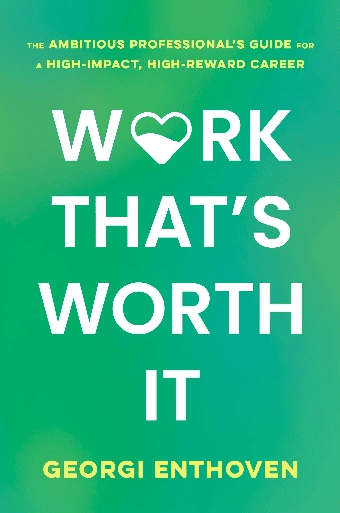
Ready to love your Mondays? Buy ‘Work That’s Worth It’ now – Amazon, B&N, Bookshop.org OR, need more convincing? Get the first chapters FREE here.
SHARE THIS EPISODE


13 Jan 2026
SEASON 1, EPISODE 43
Show Notes
In this conversation, Charlie breaks down why crisis language is breaking people down, how he helps Microsoft become carbon negative and water positive by 2030, and why he believes optimism is the most effective tool for climate action.
You’ll discover the unexpected ways climate work pays well, how to build influence without authority, and why the most exciting climate careers don’t have “sustainability” in the title at all.
Resource link:
www.charliesellars.com
Keep Going:
💚 Got feedback on this episode? Email the host, Georgi Enthoven: info@georgienthoven.com
💚 Want more content? Get the full show notes & bonus content on YouTube: www.youtube.com/@GeorgiEnthoven
💚 Ready to begin transforming your career today? Start with Georgi’s bestselling book “Work That’s Worth It” – grab your FREE preview or BUY the full book today!
💚 Connect with Georgi Enthoven on Instagram (instagram.com/georgienthoven); LinkedIn (linkedin.com/company/georgienthoven)
Facebook (facebook.com/georgienthoven)
Website: www.georgienthoven.com
Transcription
Charlie: [00:00:00] I wanna make something very clear and very explicit is you do not have to make a trade off. I have never sacrificed any earnings potential working in sustainability, and actually sustainability can be quite lucrative, which is very nice, and the reason that that can happen. At least in the corporate America side of the house is that the profit motive of these companies and the purpose motive have started to merge.
Georgi: Did you know the average person will work 90,000 hours in their lifetime? What if you could use those hours to find fulfillment and become a disruptor for good? Welcome to the Work That’s Worth It. Podcast. I’m Georgi Enthoven, and I’m here to demonstrate that an ambitious, meaningful, and rewarding career is not just a dream.
It’s achievable. Each episode will dive into conversations with global change makers who crack the code on combining income and impact. If you’ve ever felt [00:01:00] like you were torn between a paycheck and your purpose, or maybe you simply yearn for more purpose, you’re going to be exposed to the. Vicious humans who have done it themselves ready to make your work worth it.
Let’s get started.
Can you do meaningful climate work without sacrificing your income? That’s the question that drives most of my research at work that’s worth it. I started this journey because I wanted to look my three children in the eyes and tell them, yes, we have handed you a difficult world, but I’m doing my part to create better paths forward.
But when it comes to careers and your financial wellbeing, it’s not productive to ask ambitious people to choose between impact and financial stability. They won’t make that choice. And what I have discovered, they don’t have to. Today’s guest proves you can indeed have impact and income. Charlie Sellars is the Director of sustainability for [00:02:00] Microsoft’s Cloud operation and innovation where he’s helping one of the world’s largest tech companies become carbon negative, water positive and zero waste by 2030.
He’s also the bestselling author of What We Can Do, a Climate Optimist Guide to Sustainable Living. Here’s what makes his story particularly interesting to me. Charlie has zero background in sustainability, but he has intentionality, optimism, and the courage to make climate work part of his brand today.
Let’s tune into how he did it and how you can too. Charlie, great to have you on the work that’s worth at podcast.
Charlie: Thank you for having me.
Georgi: Yeah, this is gonna be exciting and we’re just having a quick conversation offline about the snow in your backyard and it being the reason that you’re in climate work.
So I’m excited to hear about that. Totally. But first I wanna jump in and you’ve had a very interesting career so far, and I want to talk about the steps in your career that you have taken to get you where you are [00:03:00] now, and also how you got there.
Charlie: Sure. Yeah. And it’s fun because the career is always ever growing.
It’s always ever changing. And right now it’s kind of two things at once. It’s my day job, which is being a director of sustainability at Microsoft, and it’s my other day job, which is I’m now the author of this lovely little book called What We Can Do, A Climate Optimist Guide to Sustainable Living. And I say Day Job because for the listeners who might be thinking like, oh, what’s it like to write a book?
Writing it is kind of the easier part because then, then it’s actually kind of, you gotta turn it into a product and then a business. But I digress. How did I get here is your question. How did I get into this space of this being in the environmental space? It’s a fascinating question and one that I think is fun to reflect on because I have no background in sustainability whatsoever.
When I was in college, I took zero classes on sustainability. I was not part of any environmental student groups. I [00:04:00] didn’t really think it was for me because at the time I was being told, Hey, if you want to get into sustainability. You’ve kind of got two options. One is you can go and get a PhD in like geology, which I’m not smart enough for that.
Or you can give up potential profit and revenue across your career and go and work for a nonprofit and try to advocate for change. And both of those didn’t really seem super. Compelling to me. So I went instead to get a degree in physics, I went into effectively the consulting space, kind of the advisory consulting space.
And I had this day where I was with some of our clients and for whatever reason, Georgie, they would always put me right next to all the oil and gas clients. Like without fail, it’s me next to Chevron, it’s me next to ExxonMobil. And we were at this dinner and one of them, almost unprompted just said, Hey.
Cut me open right now. If you do, you’ll see that my blood is black because I bleed [00:05:00] oil. And that was just kind of my moment, Georgi. I was like, what am I? What am I doing? What am I doing with my life? So the start of my journey to sustainability kind of started there. I had already been doing on the side some nonprofit work.
I was on the board of a nonprofit called the a hundred dollars Solution, but I kind of saw that as being a side gig to the thing that actually made me money. But I had the courage to go to my boss after that, that meeting and say, Hey, can I work on sustainability? Can we do sustainability here? The answer was no, but the answer was not here.
But maybe at this other part of the company, if you’re really serious about it, Charlie, go rotate over there and see if they have a job available. And the part of the company that had the job available had an events, basically like a program director for events as the role, and it was for a group of people in charge of supply chains.
My job was to get them to come together and to talk about ways that they could make their supply chains better. And I had this moment of realization. I was [00:06:00] like, well, is anyone gonna stop me if I make them talk about sustainability? Like, is that a problem? And my boss said, no. They like talking about sustainability, like as long as they keep paying us, who cares what they talk about?
And that was my aha. Georgie. So I went from a guy with no background in it who didn’t think this was ever gonna be something that I could do professionally. To starting to weave it into effectively an events role. And I did that for three years. I was getting our clients to talk to each other on sustainability, bringing in really cool speakers to talk about sustainability.
Selfishly putting myself on stage once or twice to talk about sustainability. And it got to the point where one of my clients was basically convinced that she needed a sustainability team. And because I was the person that incepted that notion into her mind, I was the person she called when she said, Hey, I wanna start this thing.
And that was back in 2020 to kick off Microsoft’s sustainability team for its devices business, uh, central sustainability office. And from there, I’ve been working on sustainability in the company ever since. So here I am, no [00:07:00] background in it whatsoever, and with the assumption that it wasn’t for me.
Falling backwards into it by kind of making it part of my brand, making it part of my product, because I gave myself the permission and nobody told me that I couldn’t. Well people, some people told me I couldn’t, but I didn’t let ’em stop me.
Georgi: Yeah. So many interesting threads there. And what an interesting way to start a career.
So one of the things I noticed is that you are not afraid to put yourself out there and follow these threads of interest, which is something that you obviously did and you were able to open the doors that you needed to. Yeah. But also this really common. Theme that I experienced when I graduated college many years ago, but I see it all the time on campuses still, and it’s this idea that you either do good or you do well.
And which one is it? Right? Which would you like to do? Would you like to be a hero at the not-for-profit company? Or would you like to make tons of money and live a good life? And those are sort of the options that you’re presented. [00:08:00] And. It feels that we are misguiding so many young people, and that is part of what I love to do, is to shine the light on where these opportunities are, where you can actually have both.
And so this is exciting. So tell us about what you do at Microsoft now.
Charlie: Yeah, and, and before I do that, you know, I’m laughing Georgie as you say that because when I went to my 10 year college reunion, I went to a panel on climate change and the whole topic was like, here’s what you can do about climate change.
And they said three things. The first one become really rich because if you become really rich, then you have enough money to buy solar panels and a Tesla. Cool. Second thing they said is, go get that PhD in science, not for everybody. And then third thing they said was, go work for the nonprofits or go work for a politician to advocate for change, which is very important work.
But I remember raising my hand and saying like, Hey. What about the private sector? And their response was, oh, well we don’t know anything [00:09:00] about that. And that’s where a lot of kids are, you know, in college are being guided is by a bunch of people who don’t understand how sustainability works in the private sector and ’cause in the private sector, that is where the profit motive and the purpose motive can be one and the same.
And that’s really exciting. So to your actual question, what do I do at Microsoft? My current role is as director of sustainability for Microsoft’s cloud operations and innovation team. So functionally, what does that mean? It means that I, I run a central office that’s in charge of making sure that all of the data centers that we’re operating across the world for Microsoft are doing what it takes for us to meet our 2030 sustainability commitments to become carbon negative, water positive, zero waste, and protect ecosystems.
So one day it might be talking about really cool things that we can do to optimize our data centers to reduce their reliance on water for cooling. Another day it might be kind of novel deals on how to find low carbon building materials. Another day [00:10:00] entirely might be around, well, what’s what’s going on in the fuel space?
Like I have cattle ranchers reaching out to me with some frequency, Georgie, because they’re like, Hey. You want a bunch of renewable natural gas. We have a bunch of cow manure that’s just sitting there like, can do you want our manure? That’s kind of a, that’s a, I never thought I would end up in a world where I was getting sold poop, but here we are now.
Georgi: For good. For good, yeah. And what sounds like your job is filled with innovation and new opportunities. So you’re in this larger structure, but your group in particular is a group that’s sort of forging new paths, open to new ideas, open to innovation. And how has that been within like a very steady ship.
Charlie: Yeah. Well, and I think this is what’s fun in a lot of regards around doing sustainability in a world where the problems aren’t solved yet, is there’s so much innovation and [00:11:00] creativity that has to happen. This is not just a Microsoft thing. This is kind of corporate sustainability all over the place.
Because one of the fascinating things that I’ve learned is that for many companies achieving kind of net zero emissions is not necessarily a lack of. Willpower. Certainly for some companies it is, but sometimes it’s literally a lack of available solutions that exist to let you do it. And so like in my world, we have to innovate because we literally can’t buy our way out of the problem.
And that’s why there’s so much fun, uh, like, I’ll give you an example. The very first project I worked on. We said, Hey, back then, we kind of wanna try a lot of stuff and see what sticks. So we said, what, what are, what are people doing about the ocean plastic problem? You know, the great Pacific garbage patch?
And we said, wait a second. We found, we have a supplier who is saying, uh, they can get us this ocean plastic. Let’s dump it on a table and see what we get. And this stuff was gross. You know, it smells awful. It’s been degrading in, you know, in the salt water and in the sun [00:12:00] for God knows how long. But that’s part of like the fun innovation, saying this is a brand new challenge.
What can we do with this entirely new material? And the result was this little guy, it’s called the ocean plastic mouse. Now, sadly, Microsoft doesn’t make mice anymore for the most part. But when we did, this was one of the things we got to do, and we said. What can we do to like to put ocean plastic in a mouse?
And it was such a fun project to be able to work on, but there’s so many stories like that of places where innovative and creative people are kind of just raising their hands and saying, there are problems we wanna work on that nobody in the world has solved yet. Let’s go figure out what do we wanna do to solve ’em.
And that’s very fun.
Georgi: Yeah. And probably being in Microsoft gives you an advantage there because you have resources and influence and so you’re able to take some risks on investing in ideas.
Charlie: Yes, but here is the fun call to action to anyone listening is don’t [00:13:00] use like the fact that you don’t work at a mega company as an excuse not to at least try and see what you can do.
And I’ll give a very fun example in how my publisher and I made my book. So one of the things that was very cool once I got my publisher, wise Media, they’re here in Minneapolis with me, is they were willing to play ball when I said, Hey. I want this to be the most sustainable book you have ever produced.
And to their credit, they were like, well, we don’t know what that means, but let’s go give it a shot. And it turns out they had a lot of really good ideas to do it. And of course I would nudge them and bring ’em along the journey as well for various pieces. But we were able to do innovation in very personal ways.
Ways that weren’t trying to like do crazy things. Like as an example, Georgie, did you know that there’s a whole world of sustainable font making?
Georgi: Well, I am so excited you brought this up, but I should have met you definitely prior to April because I did try to see how I could launch a book in a more [00:14:00] sustainable way and was met with No, no, no, no, no.
Oh, interesting. Not possible. Not possible. Through Amazon. I do print on demand. Oh, okay. And I was told in many different aspects that I can’t control the paper, I can’t control the ink, I can’t control how the shipping is handled. And so it felt that I did not have that power. So I’m so excited you did.
And maybe we have to write an article on that.
Charlie: Well,
Georgi: but this is really exciting and I, I love your example of how you’ve been able to use a personal. Product like your book to match your values. So it’s not just, you know, doing it as your job, but it’s actually something that you care about on a personal level.
Charlie: Well, I think why I was so fortunate is that the publisher I’m working with is, is an indie publisher. They, they put out fewer books every year. You know, it’s folks that are just down the street and it’s one where there was just this willingness to try and I think I, maybe I got lucky with my publishers what it sounds like.
But, oh my goodness. The different things that they were willing to bring to the table [00:15:00] that were kind of things that maybe have shown up in pieces at different books before. But one of the favorite things that they found for me was they were able to find, it’s something called an environmental benefit statement from the Environmental Paper Network.
Paper Calculator 4.0. I wanted to get, make sure I got that right. But it, it shows, it actually calculates after you make all the changes to the book, what is the remaining. Environmental impact of making the book. And we were able to reduce the carbon footprint of our book by like half, which is awesome.
And, uh, if you’re curious, Georgie, it’s about if you were to like equate it to like how many charges of a smartphone, how much, like comparatively for energy for a single book? Yeah. It’s about a year, about a year of charging a phone, makes a book. It used to be two years, so we made some progress.
Georgi: That’s amazing.
I love all your optimism and excitement and actually joy for the work that you do. I noticed that you are one of the youngest directors at Microsoft, and I wonder how youth. Has been an advantage or an asset for you when it’s [00:16:00] come to climate, work and innovation in this space?
Charlie: Yeah. So for other young people who might be listening who are in this space, the advice that I give is very silly, but I’ll say it anyway, is you have to remind the executives of their kids.
But you have to make them realize that you’re better than their kids. So tell us what that means. Not
Georgi: tell.
Charlie: Oh my goodness. I cannot tell you how many times I have had some executive say like, oh, I wish my kids were as gung-ho as you. Or in one case, I ha you know, had a direct report who had a kid my age.
And she was just like, oh, you know, it’s so fun to see you know, what you’re doing. Versus, uh, anyway, I’m, I won’t get into too many details, but I think it’s one of those things where if you can kind of combine the youth with the enthusiasm, with the rigor and an ability to be a community builder on top of a lot of like really hard and real business skills.
[00:17:00] That’s a nice, sweet spot to get to where you can really kind of make people happy and excited to work in this space. Because one thing that’s so critical about sustainability, as I’m sure many, many people listening know, is you often don’t have a lot of leverage. You often don’t have a lot of leverage to actually get things done because so much of the work is influenced.
And so that’s where the spirit of youth is so fun, because that is where that positive energy can make other people be like, you know what? I wasn’t really caring about doing sustainability work, but I don’t know. You’ll seem like a fun guy. Let’s go work on it together, or, and I’ll give you one last one, then I’ll, then I’ll pause.
This is the first time it’s ever happened to me. I gave a book talk in Vermont earlier this year and because I’m a young guy who’s, you know, likes to talk and smile, there were community members who were like protesting my talk. ’cause they’re like, oh, he’s gotta be an industry plant. He’s gotta be, this has gotta be like some subterfuge for something else.
It’s never happened to me before. But I was laughing. They’re like, they thought that I single-handedly was trying to [00:18:00] sell Vermont on building data centers, which is not at all what my book is about at all.
Georgi: But probably they have good reason to worry, but you’re the wrong target.
Charlie: Yeah. No, I was there just to talk about climate optimism, but it was one of the best compliments I’ve ever received that someone’s like, oh, young guy with a lot of energy, he must be up to no good.
Georgi: Yeah. Now, tell me about this influence piece I like to think about with the people that I work with is sort of really leaning into your gifts and it sounds like influence is one of yours, potentially storytelling as well. Maybe even adaptability. And how, like what are the sort of core strengths that you have or gifts that you have that have been able to shape what you’re doing and like where did they birth from?
Charlie: Well, in some regards, they just birth from observation. And I’d like to think I’m generally in a pretty optimistic person, but something that I’ve noticed is that so much of environmentalism up until now has been very much in [00:19:00] crisis language. In crisis mode for very good reason. But you, you know, after a point, the crisis language wears people down, breaks people down, and doesn’t actually activate, especially people who are a little bit on the edge of wanting to go and.
You know, like people, you need to go on the journey with you, I guess, because like if you are just a regular person in a regular job somewhere and you’ve got a million things on your plate and you’re trying to pay the bills and you’re already working late, if somebody comes to you and says, Hey, if you don’t work on this sustainability thing, I’m gonna write a strongly worded letter to like yell at you.
You’re just gonna tone ’em out. ’cause that person doesn’t have any leverage over that person. But if you flip it on its head and say, Hey, what if we try and work on this really fun project? It might be career advancing for you. It might be good for your customers, it might be good for your cost basis for what you’re working on.
As if people can see advancement and joy and passion out of working on sustainability with you. That’s the influence. What I’m talking about is getting regular people with regular jobs [00:20:00] to come on the journey. ’cause oftentimes they’re the ones actually doing, quote unquote, the sustainability work at, at many of these companies.
Like I’m in a central office, I help direct a lot of the work, but I don’t know how to do anything. I don’t know how to physically execute anything that’s actually happening. I don’t know how to structure a power purchase agreement. I don’t know how to like procure a green concrete, but we’ve built an environment that has inspired people to want to go and do those things, which is very fun.
And so like net Net is, why am I like this? Great question. Some of it is nature. But some of it is nurture of just seeing people taking the opposite approach and just not being effective, even though they were correct morally, you know? Does that make sense? Yeah.
Georgi: Yeah. So using your intuition, less about playing by the book and a set of rules, but like leaning into what’s working and your own intuition.
Charlie, let’s talk about how to make climate work financially sustainable. We talked about it a little bit before, but I would love to get your feedback on what’s worked for you and what you see working in the industry, especially [00:21:00] with the research you’ve done in your book.
Charlie: Sure. So for those listening, I wanna make something very clear and very explicit.
Is you do not have to make a trade off. I have never sacrificed any earnings potential working in sustainability, and actually sustainability can be quite lucrative, which is very nice. And the reason that that can happen. At least in the corporate America side of the house is that the profit motive of these companies and the purpose motive have started to merge.
And so therefore, my type of role is paid at the same, you know, salary band as any other director level role at Microsoft. That’s awesome. That’s exactly what we wanna see. Now, historically that wasn’t the case because the work was necessarily kind of outside the profit motive because a lot of the work was trying to slow down the profit motive, if you will.
So this has been a really interesting integration of these things, and there’s a lot of [00:22:00] opportunity out there financially in so many different spaces. I mean. You know, the clean energy is absolutely exploding in terms of its usage around the world, including in America. Even despite what you might hear at the federal level, there is because.
Of all of this work being done with the Greenhouse gas protocol to help clarify what counts and what doesn’t count. People now have a lot more financial willingness to put bets on things like low carbon building materials or you know, energy efficiency or, oh my goodness, like carbon offsets and removal.
There’s a whole bunch of stuff that now has very wealthy players spending a lot of money. On this space. That’s really cool. And so, you know, there are still very much jobs that are very important that don’t necessarily let you keep both the profit and the passion together. But this new world, at least of corporate sustainability and startup sustainability and climate tech.
[00:23:00] Doesn’t necessarily make that same trade off. That is quite nice. So I’ll pause there, Georgie, in case there’s any particular angle you want me to go there. Like, I probably shouldn’t say my actual salary on, on, on the camera, but
Georgi: No. Well, I think what, what is exciting is you feel rewarded for your work on not just what you are earning financially, but also the impact that you have been able to have.
And you know, just to repeat it, you can. Do good in the world and do well financially. And this is sort of really what I am most excited to show people, and that there is this section where this happens. Not all jobs are the case, but this is really happening. And what’s most exciting, Charlie, is we get people like you to play on a bigger stage.
Because if you are self-sacrificing working crazy hours. Not all, not-for-profits of this case, but let’s say in a not-for-profit environment where you’re kept small because you’re barely making ends [00:24:00] meet, it just means your voice is smaller in the whole community of climate work. And so I’m so excited that you get to have this big voice and these leavers that you get to pull.
But I’m also interested in if you have any resources or what you suggest for people who are looking to or an income and have an impact with their climate work.
Charlie: Absolutely. I’m gonna be slightly spicy on this one. Go for it, Jian. The first thing I would say is you’re probably wasting your money if you’re going back to school to get into sustainability.
Perfect. And that is a bit of a shocker for a lot of people to hear because, but that’s what we’ve been told. It’s like, oh, if I want to go and work in sustainability, I need to go get my master’s in sustainable business management, blah, blah, blah. That certainly works. I’m not saying like don’t do it at all, but that’s a very expensive solution to something that you probably don’t need to do it.
So in my book. I have the whole second part of the book, all dedicated to how you get a career in sustainability. And one of the most profound things that I try to anchor [00:25:00] there is this notion. It’s not just me saying it. I’ve, many people are starting to say it loudly, including the person I quote in the book, drew Wilkinson.
But every job can be a sustainability job, and you can think about it almost as three types of concentric circles. So the smallest concentric circle are jobs that have sustainability in their title. These ones are just not super available. And the ones that are, because everyone wants to work in sustainability, gets all the applications right away.
Like when I hire somebody onto my team, I get easily 200 applications in like two hours. Wow. It’s crazy. It’s, it’s absolutely like if you can win the lottery good, like do those jobs, but it’s, it’s competitive. But that means that there’s missed opportunity that you can take advantage of. So the second big circle, which is a lot more jobs, is literally any job at a sustainability forward company.
Like if you’re working at a solar company, doesn’t matter what your job is at the solar company, you could be [00:26:00] the accountant, you could be head of hr, you’re still in a sustainability job because those are necessary functions to make that company run and likely gets to let you take advantage of the skillset and the background that you already have.
Rather than you trying to go to, to school, to completely throw all that away, to try to re-pivot your career. And frankly, most sustainability title jobs anyway are kind of just reporting jobs, which that’s just not for everybody. But the third biggest is kind of how I started my career in sustainability, is layering sustainability on top of the job you already have at a regular old company.
There are so many stories of people doing that. I was in the event space, I layered it on top that got me to let me do it full-time. There’s a wedding venue here in Minneapolis that they just on their own said, Hey, we’re gonna offer a sustainability wedding package. No one told them they had to do that, but they are events professionals and said, let, let’s layer it on top.
Coldplay decided to put out a sustainability report like. No one’s telling them to do these things. There’s so many [00:27:00] cool examples of people who are really, really good at something already and are just the people who are saying like, no one’s, there’s no good reason why it’s not happening, so why don’t I become the reason it should happen?
Georgi: Yeah, and I love that. And that’s to
Charlie: your earlier question. Yeah. And to your other question, Georgie, is like, how am I one of the younger directors at my company? It’s because. I decided to be that change. Like I’m not gonna just throw the the Overstated Gandhi quote at you, but I think I kind of am. Is I decided to be the change I wanted to see in the world.
I took advantage of that and that absolutely accelerated my career because I identified something that was really valuable that no one was working on. Yeah. And so since I was the first person to go all in on it, it ended up rewarding me.
Georgi: And in my book I talk about this idea that you get to be responsible versus have to be responsible.
And when you get to be responsible, yes, I love that you are excited about it and you feel that you wanna participate. I think a lot of the youth entering the [00:28:00] workforce now feel like they have to be responsible given the world that they’re entering in. And so just that mindset shift can make it fun and exciting.
What was the reason or what motivated you to write your book?
Charlie: So three very quick answers. One, COVID was boring. Two is I have the, the benefit of, I probably talked to at least one person a week who reaches out for career advice, and I kept hearing the same misconceptions over and over and over, which is, oh, I gotta go back to school to be able to get involved.
Half the time. I would just ask them like, Hey, what are you doing right now? They’re like, oh, I work on x. I was like, you already have a sustainability job. They’d be like, oh, really? So, you know, some of it is just reiterating to people that if they recontextualize and reframe where they’re at, they’re a lot more empowered than they might think that they already are.
And then the third reason was I think because we’ve been using crisis language to describe sustainability and climate change for so long. I was starting to get [00:29:00] really worried that people were gonna start just giving up, and there’s a very good reason why I called my book What We Can Do, a Climate Optimist Guide to Sustainable Living, because that optimism really is pragmatic.
If you don’t believe anything is worth doing, you’re not gonna do anything. But if you do believe that what you do matters and that you have the ability and power to make change. You’re more likely to actually do it. And hey, guess what? If you’re having fun doing it too, it’s stickier. Like, oh my God, I had so much fun bothering my publisher about all the ways we can make my book as sustainable as possible.
I have tons of fun, like sending random emails to the city to try to let me install EV chargers in the Boulevard in front of my house. Like it should be fun because we’re building, we’re building the sustainable future we all need. And if anyone thinks that’s a sad thing to work on, like. I don’t think that’s the right energy.
Yeah. I think fun is such a sticky way for this to actually happen.
Georgi: Yeah. Yeah. Okay. [00:30:00] Thinking about your career, how replicable is it or did you get lucky?
Charlie: Yes. So next question. Yeah, I, I think, you know, there is of course a lot of luck in where I am today. I am lucky that I was able to, you know, get gainful employment right away at a company outta college.
I was lucky to be able to go to college. I was lucky that one of the clients at my company just happened to be my future boss. There has been luck all the way through, but that luck. Is also some luck that I’ve made. And so if you aren’t putting yourself out there, you reduce your likelihood of having those lucky moments happen if you are not leading with intention and intentionally trying to like build the sustainability into your brand and into your work.
Like if I hadn’t done that, then my future career never would’ve happened because it just wouldn’t have, no one would’ve thought about me as the guide that they wanted to do sustainability. And even if every single day, it’s unlikely, a lucky thing happens. The more you put yourself in [00:31:00] situations where you’re putting yourself out there, the more roles of the dice you get.
And eventually you’re gonna get the right roll of the dice if you give yourself enough opportunity to win that lottery, so to speak.
Georgi: Yeah, so such an exciting career and I have learned a lot from talking to you. Where can people find you? Learn more about your book, get your book. Where does somebody find Charlie Sellars?
Charlie: Well, thankfully@www.charliesellars.com, so pretty easy to remember. Thankfully you can find the book itself there, which lets you order directly through my local distributor so that, you know, we don’t have to give cuts of the money to anybody else, but if you wanna order it on Amazon or you know, through Barnes and Noble.
It’s there too. And we’ve also got audiobook and ebook versions as well. So effectively, wherever books are sold, you can find it. But for more information, you can always pop them to the website@www.charliesellars.com. And if you misspell my last name, it’s okay. I bought both domains. It should be able to fix it for you
Georgi: and we’ll link it in the show notes.
[00:32:00] Charlie, thank you so much for being here. It’s been wonderful to have you. I’ve learned so much. Looking forward to being in touch with you.
Charlie: Yeah, no, likewise. And for those that just listened, hopefully you’re coming away a little bit more inspired, a little more empowered, because you are more powerful than you think.
Don’t let ’em tell you otherwise. And so if I’ve done anything in my career, it’s hopefully to try to bring that joy to people. So. If you thought it was joyful, I’m gonna do georgi a favor. Give her a nice review as well. ’cause that’ll make her happy too, and that’ll give some joy to her.
Georgi: Yeah,
Charlie: I love that.
Thank you for having me on.
Georgi: That’s what makes the world go around, support the people that are doing good in the world. Now let’s jump into some hot takes. First, I want to shelf this from the rooftops. You can do well and do good at the same time. As Charlie shared corporate sustainability. Jobs pay the same as any other corporate role you can have both income.
And impact. Second, Charlie’s optimistic outlook opened doors for him. Crisis language wears people [00:33:00] down and makes them tune out. If you show up with energy, enthusiasm, and solutions instead of doom, people actually want to work with you. That’s how you build influence before you have authority. And third, every job is already a climate job.
And being young is a competitive advantage to start doing the work you care about. Stop hunting for roles with sustainability in the title. Start making sustainability part of your current brand, and that’s how you leapfrog into director roles. If you combine youth with enthusiasm, rigor, and real business skills.
Executives will champion you. And that’s a wrap for today’s episode of Work That’s Worth It. Remember, every conversation we share is designed to empower you to build a career that’s truly worth your time and energy. There are future disruptors out there just like you, who would appreciate the conversations in this podcast.
Please support me by spreading the word and sharing this episode with a friend or two. [00:34:00] Or visit my website@georgienthoven.com. That’s spelled G-E-O-R-G-I-E-N-T-H-O-V-E n.com. Until next time, ask yourself, what problems am I solving and are they worth my valuable time? Your intentional choices today can lead to exponential impact tomorrow.
Thanks for listening.


GET GEORGI'S BOOK
Meet Georgi Enthoven
As the visionary founder of Work That’s Worth It, Georgi specializes in unearthing the unique inspiration and career desires of those seeking significance both for themselves and for the world.