
About this episode
When Jane Melia’s old gas furnace was about to die, she couldn’t find a replacement solution that actually worked. So she built one herself—installed it in her own home, cut her bills by 40% and emissions by 90%.
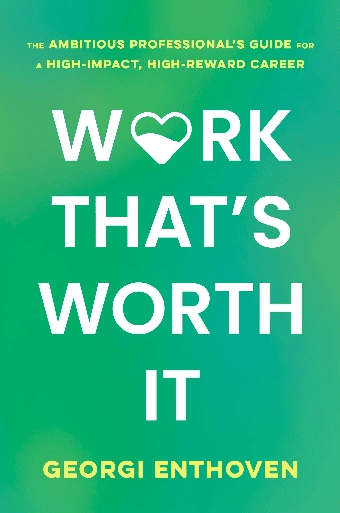
Ready to love your Mondays? Buy ‘Work That’s Worth It’ now – Amazon, B&N, Bookshop.org OR, need more convincing? Get the first chapters FREE here.
SHARE THIS EPISODE


05 Aug 2025
SEASON 1, EPISODE 36
Show Notes
That personal frustration became Harvest Thermal, now a multi-million dollar clean energy startup.
From her childhood experiments with solar thermal to leading five different startups, Jane shares the green flags and red flags to look for when choosing a climate tech company. Plus, why you don’t need a PhD to succeed in clean energy.
Also, her thoughts on being introverted while leading teams, raising funding, and building meaningful work.
Plus, discover the one career move that changed everything for her—even though it meant taking a pay cut and title demotion.
Key Points From This Episode
- Jane’s passion for clean energy started in childhood with science-loving parents who experimented with solar thermal hot water systems when she was 8-10 years old.
- Her first engineering project analyzing wind farms in the 1990s made her realize that work could be both interesting and exciting, not just routine.
- The startup journey involves constant fundraising – you’re either raising money or preparing for the next raise, similar to ongoing parental responsibilities.
- Starting a company means carrying enormous responsibility across all areas – from ensuring employees get paid to product safety to customer satisfaction.
- When evaluating startups, Jane looks for women in director/VP level positions as a litmus test for company culture and inclusivity.
- Climate tech offers diverse career paths beyond engineering – sales, operations, finance, and marketing roles are all crucial for startup success.
- Advanced degrees aren’t mandatory for success in clean tech; multiple career paths exist and experience can be gained in larger companies before joining startups.
- Building and maintaining a professional “village” is crucial – these relationships become invaluable when starting companies and facing challenges.
- Being an introvert can be a strength in founding companies through careful preparation and thoughtful decision-making rather than relying on spontaneous interactions.
- Jane transitioned from CEO to Chief Revenue Officer at Harvest Thermal to focus specifically on scaling their commercial operations from hundreds to thousands of deployed systems.
- The “aha moment” for meaningful work came at her first startup (SoulFocus) where despite taking pay and title cuts, she found the energy, responsibility, and sense of purpose deeply rewarding.
- Harvest Thermal’s solution reduced Jane’s home energy bills by 40% and emissions by 90%, demonstrating the real-world impact of their heat pump and thermal storage technology.
Links Mentioned in Today’s Episode
Transcription
Jane: [00:00:00] All around me. I could see this innovation happening, this bubbling happening of ideas, and I was thinking, you know what? I will kick myself one day, but not having tried if I don’t make the jump.
Georgi: Did you know the average person will work 90,000 hours in their lifetime? What if you could use those hours to find fulfillment and become a disruptor for good?
Georgi: Welcome to the work That’s Worth It. Podcast. I’m Georgi Enthoven, and I’m here to demonstrate that an. Vicious, meaningful and rewarding career is not just a dream, it’s achievable. Each episode we’ll dive into conversations with global change makers who crack the code on combining income and impact. If you’ve ever felt like you were torn between a paycheck and your purpose.
Georgi: For maybe you simply yearn for more purpose. You’re going to be exposed to the ambitious humans who have done it themselves, ready to make your work worth it. Let’s get started.[00:01:00]
Georgi: What if the key to solving a pressing climate need started with an 8-year-old experimenting with black plastic and hot water? Today’s guest, Jane Melia, has been fascinated by clean energy innovation since childhood. Literally ting with solar thermal heating. Before solar panels were even a thing. But Jane didn’t just stay curious.
Georgi: She turned that childhood wonder into serious expertise with a PhD in fluid mechanics and experience across five different clean energy startups. She’s seen every stage of the startup journey from the inside. She’s worked everywhere from large consulting firms in the UK to HP and Silicon Valley, always with one eye on the clean energy revolution that’s happening around her.
Georgi: Today, she’s the founder and chief Revenue Officer of Thermal, a company that’s helping get gas out of homes across the United States. Welcome, Jane. So great to have you on the work that’s worth it. Podcast. [00:02:00]
Jane: Hi Georgi. It’s pleasure to be here. Thank you for hosting.
Georgi: Yeah, this is gonna be fun. You wrote to me in your bio that you have been passionate about clean energy for as long as you can remember.
Georgi: I was wondering where that originated
Jane: from. That goes back to having parents who were science geeks and loved innovation. So even before solar panels were a thing, we were talking about it, studying about it, thinking about, in particular the solar, thermal hot water where you just running water over black plastic and you’re heating the water that way.
Jane: So we were experimenting even when I was a, a kid, 8, 9, 10, just, just messing about with it. So I had this. Standing that there was a magic out there and that there were ways, there were other ways to do things that were, were kind of interesting and curious. In fact. So that was, as a, as a kid, wow. So young. I was, you know, lucky enough to have parents who were interested in that innovation.
Jane: And so that exposed it to me. So that was just as a child watching what was happening [00:03:00] around me. But then I became an engineer. A civil engineer did a graduate degree as well in fluid mechanics. And my first job where I was working as an engineer took me into a number of interesting areas like air pollution and so on.
Jane: But one of the projects that I was most excited about was analyzing wind farms and trying to understand, you know, what would be the benefit of a wind farm located in various locations? How much energy would it actually deliver? So that was being able to. Apply my engineering skills to actually start to expand renewables.
Jane: And this was way back in the nineties, right? So a long time ago. So this is still quite early on, just actually, I think that’s what made me realize that work is work and work can be very interesting, but work can also be exciting as well. And that first project on wind turbines made me see the difference.
Georgi: Oh, that’s so interesting. And was that a startup?
Jane: No, that was a large engineering [00:04:00] consulting firm, mid-size engineering consulting firm in the uk. You can probably tell from my accent I’m, I’m originally British, and so it was a reputable consulting firm who was really advising on that. So I wasn’t yet in the startup world.
Georgi: Yeah. So you had a chance to follow your passion, but within a structure of the corporate world.
Jane: Absolutely, yes. Yeah,
Georgi: yeah, yeah. Well, I know you did pivot at some point to the startup world. In your bio, it said that you had already been a leader in five startups, which is a lot, and I would love to hear about that switch.
Georgi: For you. It sounds like you’re a very curious person, and something about those startups drew you into their realm.
Jane: Yeah, absolutely. I mean, there were a lot of things that were happening in my life that enabled me to get there. First of all, I had pivoted from engineering to the business side, so I was working more on the supply chain and operations research and you know, strategic decision making that allowed me to go from Europe to California.
Jane: So I’ve been now in [00:05:00] California, in the Bay Area. Since, well, for over 20 years now. And so that was one thing put me in the place, which was the Bay Area in the two thousands and what was happening there. There was a just so much innovation happening in clean energy. And so I was doing my job at hp, interesting job, great colleagues, et cetera, et cetera.
Jane: Quite demanding. But all around me, I could see this innovation happening, this bubbling happening of ideas, and I was thinking, you know what? I will kick myself one day for not having tried if I don’t make the jump.
Georgi: Yeah. What about the exciting opportunity to work on something new? Or what would you kick yourself about
Jane: not working on something that was new, but also that had an impact?
Georgi: Okay. Right.
Jane: I think there had been growing awareness about the challenge of for all the emissions we’re releasing to the atmosphere and the impact that’s having on our temperature, but therefore all our. Crops on our population, on inequality. I mean, so many impacts due to what we’re releasing to the atmosphere.
Jane: And [00:06:00] I think there, you know, I was very aware of that and I think many people were, I could see that this was one part of the solution, right? You know, give us a better alternative, clean energy, solar, wind, or many others. Let’s be part of the solution. So it was something that was technically interesting, but also something that was addressing.
Jane: Important challenge that humanity is facing.
Georgi: Yeah. And tell us about where you are now at Harvest Thermal.
Jane: Yeah, so I founded Harvest in 2019. Co-founded it, I should say, in 2019. And so this was, as you mentioned, I was, did have roles in four other startups before doing that. So I was, I guess, very well versed on the lifecycle of a startup, the challenges, what to expect, the somewhat emotional rollercoaster that you go through in the funding cycles and everything.
Jane: So I was used to that. I was aware of. How to navigate some of these challenges. So I had a good background in that, and [00:07:00] then I encountered the personal problem of an old gas furnace that was about to die, needed replacing and realized that the solutions out there, which were good. It didn’t really solve the full problem and that this was a huge gap in a need.
Jane: It was a huge need for us to be able to solve the problem of getting gas out of our homes. So that’s what inspired us to find a better way to do it, which we did. Installed it in my home. It worked really well. My bills went down by 40%, which is great. My emissions went down by 90%, which is great too. And that’s when I realized it was another aha moment where I was thinking.
Jane: Hmm. If I don’t do this, I will also always regret it, which is I had a real need, a real market need of how do we get gas out of homes in a way that’s cost effective and scalable, A real gap in the market. ’cause I tried and I couldn’t find a solution and then a solution that we developed that worked really [00:08:00] well.
Jane: And also experience in four other startups, which, you know, gave me some grounds in how to do this. And I knew I’d regret it if I didn’t do it. So I did it. And it’s been a really, really fun journey. I mean, there’ve been hard days, in fact, even hard weeks and hard months. But there’ve been some really good ones as well.
Jane: But most importantly, I know that. If I hadn’t done it, I would be sitting here wondering. I’m very pleased that I did so.
Georgi: Yeah. So I would love to hear from you some of the romance that we put around startups. Like what do you think is sort of less romantic that people need to know about working in a startup?
Jane: So it is a lot of hard work. It is a huge amount of hard work and that’s, I think it’s a given and I know a lot of listeners are really hard workers, but yeah, it’s gonna be a lot of hard work. It, it’s a tight rope that you’re trying to navigate between developing your product. We provide heat pumps with thermal storage, shifting loads, cutting emissions, cutting bills.
Jane: You’ve got that vision of the product. You’re trying to [00:09:00] bring it to market, but you are running the business and you have nobody to stand behind you. If you fall, so you’ve gotta do everything yourself, and you have a small and growing team, so you’re able to spread the load. But at the end of the day, if people get paid.
Jane: It’s up to you to make sure you get that money in the bank. The product is safe. It’s up to you to make sure the engineering design is done in a sound way and you get the right tests and certifications in place. If customers have hot water and heating, it’s up to you to make sure that the system works before you roll it out.
Jane: I would say the. And having spoken to many other founders and leaders in the space, the common denominator is the funding. And I think, you know, it’s difficult to get funding. Yeah, well it is just an ongoing activity. You know, you can raise one round of funding and pretty much you’re gonna be starting raising the next one straight after.
Jane: If you’re not raising it, you’re preparing for the raise. And so that is an ongoing [00:10:00] activity. It’s like a responsibility, you know, like. Just the analogy could be being a parent and being parents have a lot of good and fun, exciting things. And then it’s also getting the groceries in and making sure there’s clean laundry and it’s just the groundwork there just has to be done because without that being done, the rest is challenging to do well.
Georgi: Yeah, I mean, listening to your answer, the resounding word that comes to mind for me, for everything that you’ve just shared is the responsibility. Like you have to be really willing to hold that in so many places, which can be heavy. It is heavy. Yeah.
Jane: But it’s also a great sense of achievement
Georgi: when you know as things.
Georgi: Well, let’s talk about that. Like what are some of the benefits that you have felt from all your startup life?
Jane: So it’s quite exciting. The risk is there, but the excitement is there as you’re able to Yes, we secure that grant. Yes. We’ve expanded the team. You know? Yes. We’re able to start paying ourselves a bit more.
Jane: Yes. We’ve deployed our first customer project now. Oh, well, we’ve got hundreds of customers. [00:11:00] Oh, look at these reviews. People actually like us, right? We’ve won these awards. I mean, you know, sometimes something’s happening. I’m thinking. Remember this, Jane, it may never happen again. Remember this. I just feel that life is so much richer with all the experiences that it’s given me, both from the product side, but also then you know, being fortunate to be recognized by Time Magazine or being fortunate to be not having won it, being part of the Earth Shot community and you know, meeting amazing people who are developing.
Jane: You know, meeting a lot of other founders is also a key part of it and hearing their journeys. So I think it’s just made life really interesting.
Georgi: Yeah. And also it sounds like your day job becomes part of your life and you are invigorated by what you do. So it’s not that you have to shut the door and not think about it when you get home.
Georgi: It’s very integrated into who you are.
Jane: It is, and sometimes it can be almost too much and I’ve had to [00:12:00] learn a discipline of I will set some barriers. Yeah, they’re not very tight barriers, but there are some barriers and so, you know, there are, you know, as in many jobs, sometimes they’re very late nights.
Jane: But otherwise I do try and stop a certain hour and not look too much.
Georgi: Much. Yeah. My ear after
Jane: a certain time.
Georgi: That sounds healthy. Okay, so I also love to know a little bit about red flags, green flags for startups. You have obviously focused on the energy sector, but what has helped you decide which startups to be a part of and which ones to not be a part of?
Georgi: Not necessarily the names or anything, just more the concepts.
Jane: Yeah, I mean, first of all, it’s really understanding what they do and is this something that I find. Interesting. Is it something where I can contribute? Would I be excited or proud or of working there? Those are key things and I understand that we don’t always have that luxury of choosing something we like, right?
Jane: We’ve gotta get food on the table and you know, it’s a responsibility. But if you’re looking for [00:13:00] something. Then finding something that piques your interest is really important. Then I tend to dig a bit into the company. You know, look at the blogs, look at, you know, who’s saying what. For me, a litmus test has been checking.
Jane: Do they have any women in director or even preferably higher VP level in this company? ’cause if you’re in a small company of. 20, 30, 40 people and no women have risen to the top. I’m sometimes wondering why, I mean, there may be very good reasons, but maybe not. You know, I’ve broken a few glass ceilings, but I feel that we’re 2025.
Jane: Right. There are plenty of capable women out there, so there should be women in leadership positions in most companies.
Georgi: Yeah. You don’t want you to be doing it alone.
Jane: That’s right. Yeah. Or I don’t want to be inadvertently joining a company where the culture isn’t a good fit for me.
Georgi: For
Jane: women.
Georgi: Yeah. Yeah. And green flags.
Georgi: So definitely the product that its leadership team is including women. It’s
Jane: definitely the leadership team. It’s those meetings listening to what the founders or executive have to say. [00:14:00] Sometimes just checking the reviews, what the employees are saying. I try and talk to another employee, maybe even try and talk to an ex-employee, all those things.
Jane: I mean, an in-person meeting is really good. That’s of course getting kind of old fashioned, but there is an office going to see what it’s like. I think that makes a difference.
Georgi: I talked to a lot of young professionals and climate tech seems like a great bridge where you can have income and impact, and I was wondering if you have advice for young people interested in climate work or climate tech, what advice would you give them to get started?
Jane: So climate tech is a huge field, and it’s a field that’s really growing. And so I think one advice I would give to younger people or even to my younger self is that the journey you take is not necessarily a straight line and that there are many, many paths to get there. You know, in a climate tech company.
Jane: We need engineers [00:15:00] developing and paying a product, but we also need salespeople. We need operations people. We need really good finance people. We need great marketing folks. And as a startup, you know, founder and leader. When I’m looking to recruit, I’m actually looking for experienced people for the most part, right?
Jane: We’ve got some really great young people that we’ve been brought on, but that has to be matched by at least an equal number of experienced people. And so, yes, you may get your first job in a climate textile, and that’s great, or whatever your passion is, but you could also hone your skills in a larger company.
Jane: And earn the process. Learn how to be super efficient, learn you know how to do things really well, and then take that in addition to your intelligence and your skills in that domain. Take that experience into the startup. That can be even an added value. I mean, I started as a, an engineer, worked then in program management and supply chain and [00:16:00] so on before.
Jane: Into the startup world, and I see, you know, every job I’ve had has really contributed to the value that I can bring to harvest.
Georgi: Yeah. And the PhD that you have, how important is that in clean tech?
Jane: So I am no longer on the engineering side. A PhD I had though is somewhat relevant for harvest. I have a PhD in fluid mechanics.
Jane: One thing that we’re doing with harvest thermal is the tank as a heat battery. Now our engineers have done the majority of the work on this, but I was able to review patents, make sure it made sense, participate in some of the discussions, and that was very helpful.
Georgi: Okay. To be able to ask the right questions and to know question the terminology.
Jane: Yeah. And, you know, contribute to the thought process, at least to some extent. I’d say more importantly, that PhD is just been very useful for me throughout my career. It’s a lot of rigor, a lot of hard work. It’s also, I’m just thinking right now, it makes me think, you [00:17:00] know, doing a degree, coursework and exams is one thing.
Jane: Doing a PhD is actually in a way closer to being a startup because you’re kind of on your own doing your research and you have to create something new. So it actually teaches you that responsibility as well. There is some safety net, but not a huge lot of safety net when you’re doing a PhD.
Georgi: Yeah. But to have a lot of degrees or master’s, is it important in the space or are there opportunities to do well and reach a high level executive in clean tech without a master’s degree?
Jane: I think there are many, many examples of folks out there without advanced degrees. So I would say there are multiple paths and you shouldn’t force fit yourself into a path if it’s not gonna work for you. You know, I know folks. I did my graduate degree straight after my undergraduate degree, and I know other folks who waited two years or who waited 10 years and that worked for them.
Jane: And so it’s not mandatory to have an advanced [00:18:00] degree, and if you want that advanced degree, it’s not mandatory to do it straight away.
Georgi: Yeah. Jane, one of the things that I have noticed in all the people that I have been talking to in my process of building work that’s worth it is. The benefit of the amazing people you get to surround yourself by when you are doing work in the impact space.
Georgi: And I’m curious how it’s been for you. ’cause it sounds like you have, since that eight to 10-year-old girl been interested in clean tech. And maybe your whole world is tightly revolt around this, but do you have thoughts on that, like the kind of people you bring into your orbit?
Jane: Well, certainly I’ve been working in clean energy startup wealth of 2008, and I’ve been surrounded by a lot of amazing people and many of those were helpful to me in starting the company.
Jane: I’m thinking not just of engineering, but I’m thinking of the advice I got on on hiring and recruiting, the advice I got on accounting and all those things. So those are people from my [00:19:00] past who are there giving advice and recommendation, which is really. Helpful. We focus a lot on the clean energy part, but there was a whole chunk of my career that was not in clean energy and a lot of really amazing people there.
Jane: And sometimes they still think, Hmm, what I’m facing with that challenging problem. Hmm. What would Scott do here? And, uh, think back to those people, how they think, how they would approach a problem is just. Really, really helps. So I’ve been able to bring into harvest a number of people I had known and worked with for many years.
Jane: That is one of the benefits of founding a startup. When you’ve already got experience, you come with in a way with a knowledge, and that’s super helpful. But there are other folks who just jump in. They’ve got a brilliant idea and it’s probably really tough, but they jump in Without that support network that I had.
Georgi: Yeah. So it sounds like you’ve also nurtured that village too, like that’s something that’s been important to you. Absolutely.
Jane: Yeah.
Georgi: Yeah. In today’s age where a lot of people are working [00:20:00] remotely, and I imagine it’s a lot harder to nurture the village, but what would your advice be on that?
Jane: I think you do have to keep in touch.
Jane: It doesn’t have to be every week or even every month, but a quick note every now and then matters. If there are events where a get together a gathering, and I know it’s sometimes I’m a bit of an introvert, go there. Go there and meet people and shake hands and remind them that you’re still there, you know?
Jane: And just keep those relationships alive and it’s okay. Occasionally in life things happen and you don’t keep them alive as much as you want. Well, you can go back and reopen them, right. You know, be gentle on yourself. You can, you know, tomorrow’s a new day and you can start back and reopen them. And you know, I find that people, you know, even relationships that I haven’t nurtured that well.
Jane: I can go back and say, Hey, Nancy, remember we’re working together and most people are just delighted to catch up. And there may not even be an ask, but [00:21:00] people are usually really positive to reconnect. Yeah, and so just do it.
Georgi: Let’s talk about starting a company, being an introvert for a moment, and I think often the image is that you have to be quite extroverted and be with people and talking all the time.
Georgi: How have you managed that?
Jane: Well, I’d say there are stereotypes about introverts, and I think it’s probably a lot of, it’s pretty exaggerated. It’s a spectrum, and I’m probably closer to the middle, but I think I also know a number of other introverts who are founders and CEOs. I think. Introverts are good at taking time to think things through, good at figuring out what is the best path forward, and maybe this is speculative.
Jane: I definitely have prepared very well for those interactions, prepared very well for those investor topics, and that actually made me stronger. And so less reliant on seat of the plants type engagements. Um, more reliant on doing a lot of [00:22:00] operation, which actually helped me get better at it. So it actually became easier and easier over time.
Georgi: Yeah. So you lent into the, to the advantages. Yes. Yeah. It can be
Jane: a strength.
Georgi: Yeah. You are the chief revenue officer of your company. Mm-hmm. What does Chief Revenue Officer do?
Jane: So I’m really responsible for the whole commercial side of the business, right? We’re an exciting time in harvest. We’ve got product market fit, we’ve got hundreds of systems deployed.
Jane: I wanna make that thousands and I wanna make it tens of thousands. So it’s managing the whole sales side, but also the partner development side and the marketing side of the business. And this is something I stepped into just a few months ago. So I’m still, you know, putting things in place, but it’s actually really, it’s a change, but it’s really nice to be able to.
Jane: Give all my time or nearly all my time to this one area and really focus on it. ’cause I think one of the challenges of being the CEO is you’re responsible for everything, and particularly that [00:23:00] fundraising. And it means it’s hard to dedicate as much time to specific areas. So this is a fun chapter and we’ve got some exciting opportunities ahead of us.
Jane: So I’m looking forward to closing them and delivering on them.
Georgi: Yeah. Okay. One last question that I’m curious about is like looking back, was there a moment when you realized you had found work that was truly worth it for you?
Jane: Oh yeah. I think that goes way back to the first solar startup I was part of, sole focused.
Jane: I still remember that as one of the best work experiences of my life. It was when, tell us about it. Yeah. I had been working at HP before that and I had a really good job, great team. I’m still in touch with that team by the way, but I joined Sole focus. Took a pay cut, took a title cut. I did catch up with those over time, right?
Jane: So it is recoverable, and then found that I absolutely loved the energy and responsibility of a startup. There is no hiding in a startup. Everybody has to pull their [00:24:00] weight. You also are very much aware of what’s happening on the whole business front and what your contribution is, and that gives a sense of purpose that I found very rewarding,
Georgi: very fulfilling, and even though you had to give up title and pay.
Jane: Yep. Yep. Yeah,
Georgi: in
Jane: the beginning. Yeah. At the beginning it was a small startup, and then I worked really hard, and so I started as an individual contributor. And then after a couple of years I had my team and I started to make my way back up the hierarchy and.
Georgi: Yeah, well that, I love that. It was fine. I love that chance that you obviously have somebody who is willing to take risks and chances, but they are well thought out and you have the background and the depth of knowledge to be able to make them.
Georgi: So yeah, it’s lovely to get to hear your perspective on the startup world and the businesses that you’ve been part of. So thank you so much for sharing. Let’s jump right into the takeaways first. I’m sure we have a lot of introverts [00:25:00] listening in. Introverts can be exceptional startup leaders. Jane proves you don’t need to be extroverted to raise millions and lead a company.
Georgi: Introverts can often excel at preparation, thoughtful decision making, and taking time to think things through all crucial CEO skills. Jane’s preparation became her secret weapon, making her stronger in investor meetings and strategic decisions. Also, Jane’s frustration with her dying gas furnace led to starting harvest.
Georgi: When you encounter a problem and can’t find a solution that works, that is sometimes a great signal that there’s a real market gap. Also, the reality of starting a startup requires you to shoulder a lot of extra responsibility between constant fundraising. Being the safety net for everything and working harder than you’ve ever worked.
Georgi: You need to have the energy and the stamina for the long haul. But the flip side [00:26:00] is incredible growth. Meeting amazing people and knowing your work directly impacts the bottom line. And in Jane’s case, also the planet. I love what Jane shared when she referred to entrepreneurship as a tightrope, but one that makes life so much richer.
Georgi: And that’s a wrap for today’s episode of Work That’s Worth It. Remember, every conversation we share is designed to empower you to build a career that’s truly worth your time and energy. There are future disruptors out there just like you, who would appreciate the conversations in this podcast. Please support me by spreading the word and sharing this episode with a friend or two, or visit my website@georgienthoven.com.
Georgi: That’s spelled. G-E-O-R-G-I-E-N-T-H-O-V-E n.com. Until next time, ask yourself, what problems am I solving and are they worth my valuable time? Your intentional choices today can lead to exponential impact [00:27:00] tomorrow.
Thanks for listening.


GET GEORGI'S BOOK
Meet Georgi Enthoven
As the visionary founder of Work That’s Worth It, Georgi specializes in unearthing the unique inspiration and career desires of those seeking significance both for themselves and for the world.