

About this episode
Alex Blumberg started out confused about his career—like so many of us. A big breakup was a wake-up call that landed him in the “right place” at This American Life, where he started to lose track of time, wanted to learn everything, and became really good at something.
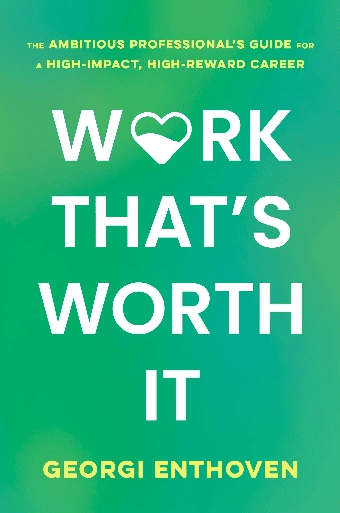
Ready to love your Mondays? Buy ‘Work That’s Worth It’ now – Amazon, B&N, Bookshop.org OR, need more convincing? Get the first chapters FREE here.
SHARE THIS EPISODE


29 July 2025
SEASON 1, EPISODE 35
Show Notes
This confidence boost became the foundation for his entire career as a master storyteller. He went on to build and sell Gimlet Media to Spotify, then made another bold pivot into climate entrepreneurship with Daisy Chain Energy.
His key insight: the people who know what they’re doing don’t expect you to fake expertise—they want your energy, enthusiasm, and genuine desire to learn. This conversation reveals why your messy, experimental 20s might be exactly what you need to find work that’s truly worth it.
Key Points From This Episode
- Your 20s should be spent experimenting to find what truly engages you – don’t expect to have all the answers immediately.
- Fear of failure often keeps people from pursuing what they actually want to do; sometimes a major life disruption can provide the push needed to take risks.
- When starting out, focus on being helpful, enthusiastic, and asking questions rather than pretending to know what you’re doing.
- Look for clues about what work suits you: What do you find engaging that others find boring? What can you get lost in during your free time?
- Master storytellers learn to translate their personal curiosity into compelling narratives that make general audiences care about complex topics.
- In-person collaboration and mentorship remain valuable even in a remote work world – try to build in face-to-face time when possible.
- Climate solutions often exist but face implementation challenges due to messy, uncoordinated systems rather than lack of technology.
- Career transitions can happen in phases – Alex went from journalist to podcast entrepreneur to climate entrepreneur, building on previous skills.
- The most impactful work often involves taking existing solutions and figuring out how to implement them at scale rather than inventing new breakthroughs.
- Aligning incentives is crucial for systemic change – Daisy Chain Energy solves the “split incentive problem” in building decarbonization.
- Climate work doesn’t need to be moralized – it’s about building better systems that create value while solving problems.
- Finding work that “clicks” involves discovering what you naturally find exciting and engaging, even when others find it tedious.
Links Mentioned in Today’s Episode
Daisy Chain Energy
This American Life (radio show/podcast)
How to Save a Planet
Transcription
Alex: [00:00:00] I think I was sort of playing it safe and not, not actually going for what I actually wanted to do because I was on some level afraid of failing. Afraid of like taking a risk, having it hurt. You know?
Georgi: Did you know the average person will work 90,000 hours in their lifetime? What if you could use those hours to find fulfillment and become a disruptor for good?
Georgi: Welcome to the Work That’s Worth It. Podcast. I’m Georgi Enthoven and I’m here to demonstrate that an ambitious, meaningful, and rewarding career is not just a dream. It’s achievable. Each episode we’ll dive into conversations with global change makers who crack the code on com. Binding income and impact.
Georgi: If you’ve ever felt like you were torn between a paycheck and your purpose, or maybe you simply yearn for more purpose, you’re going to be exposed to the ambitious humans who have done it themselves ready to make your work worth it. Let’s get started.[00:01:00]
Georgi: Have you ever noticed that some people don’t want to settle for an okay career or an okay life? They want their 90,000 hours to go towards something that enhances their day, week, year, not detract from it. Today’s guest is someone who has found his flow state multiple times throughout his career and maintain the courage to reinvent himself when he discovered new work worth pursuing.
Georgi: He’s also not afraid to dive into the messy problems that need solving. Alex Bloomberg is now co-founder and CEO of Daisy Chain Energy, which is an AI enabled software platform to manage monitoring, electrification, decarbonization, and compliance of buildings. But Alex’s journey to his work that’s worth it isn’t linear or a one-stop solution.
Georgi: His start was messy, just like so many of ours. He followed his curiosity, becoming a serial entrepreneur along the way. Before entrepreneurship. Alex spent years mastering the craft of [00:02:00] storytelling as a radio journalist for this American Life and co-founder of Planet Money Podcast on NPR. In 2014, he co-founded the Podcasting Media Company, Gimlet, which was later acquired by Spotify in 2019.
Georgi: In today’s interview, Alex shares the real stories, not the perfect ones, and shows us how he repeatedly sought out work that energizes him, even when it meant leaving behind expertise. He had spent decades building. Alex, I am excited and a tiny bit intimidated, tiny bit in maybe capital letters to have you on my podcast.
Georgi: And delighted you could be here. Thank you.
Alex: Oh, thank you very much for having me. If you only knew how much I was always faking it, all that, all that time, you wouldn’t be intimidated. So,
Georgi: okay. Well that’s a good opportunity for me to stretch myself, so, mm-hmm. I’m excited to be here with you, but I am really excited about your career journey, [00:03:00] and you are a master storyteller, and that’s been a key component of a large part of your career, and I would love to know more about that early part and how you got started.
Alex: Yeah, so, well, it’s always really intimidating to be described as a master storyteller at the beginning of an interview because now people are gonna be like, well, that wasn’t a very good story. Could have shortened that one up a little bit. Maybe a couple details, but I got started in media in like the late nineties, back when media was a very, very different.
Alex: The landscape was very different and I’d sort of like bumped, had an aimless twenties, essentially sort of like jumping around. I was a teacher, I did some social work. I didn’t know what I was gonna do. I didn’t really have what I would consider a passion or career, and I’d always been interested in journalism.
Alex: I’d always read a lot of like long form journalism, but I’d always been somewhat, for some reason, scared to like try to do it myself. But I eventually. Decided, you know, I should do it. I should dive [00:04:00] in. And there was a breakup was key to that. My girlfriend at the time broke up with me and I was like, oh my God, well now’s the time.
Alex: You know? So I should really, should really do so. Transitions something. Yeah, I should really, you know. So I applied for internships and eventually I found my way to a radio show that had recently started in Chicago, called This American Life. This was like in 1997 and I just loved it. I was the administrative assistant and slash intern.
Alex: I was answering mail, I was doing all the grunt work, but I just found it to be this, you know, incredibly exciting place to be. And it was like my boss was, you know, sort of this genius IRA Glass who was sort of pioneering this new sort of, really this new sort of kind of radio storytelling that hadn’t.
Alex: Really existed very much. And so it was like, and this was before podcast, before anything, and I was just like, this is what I wanna do and I wanna just do anything I can to stay here and learn as much as I can from this guy and this team that he’d assembled. And so I just sort of. [00:05:00] Tried to do that.
Georgi: Yeah.
Georgi: I love what you just shared about this idea of twenties being messy and hopping from one career to another, not really knowing how to make sense of it, and then landing in something, and just that feeling of knowing you’re in the right place. And so many young people that I talk to find. It’s so confusing ’cause adults always ask, what do you wanna do?
Georgi: What do you wanna be? And as if they’re supposed to have the answer. And so much of that is experimenting. And I have a philosophy of like your twenties, your number one job is to experiment so that you can find a place that feels like you wanna lean into it. And yeah. What are your thoughts on that, on that time?
Alex: I think I was sort of playing it safe and not actually going for what I actually wanted to do because I was afraid of
Georgi: failure.
Alex: Failing on some level. Afraid of failing. Afraid of like taking a risk, having it hurt, you know? And I think. I mean, [00:06:00] the breakup was pretty actual actually pivotal because like on one hand I was like, I don’t know if I could feel worse.
Alex: You’ve got nothing to lose by this point. Sort of nothing to lose. So I might as well just put myself out there because like, I’m not gonna feel worse than I feel right now. But I also think the other thing that I always tell young people, which is hard and I think to get is that. It is painful. Like you don’t know what you’re doing when you’re that age.
Alex: I didn’t, I didn’t know anything about how to do anything, and it’s really scary. So your job is to try really hard and try to get better as fast as you can, but not to pretend like you know what you’re doing. Because
Georgi: yeah,
Alex: the people who actually know what they’re doing, they know you don’t know what you’re doing and all they want from you is they want like a little bit of like maybe some sort of, you know, an inkling of intuition for the thing you’re trying to do.
Alex: That would be great if you have a little bit of a feel for it. But [00:07:00] mostly they want you to learn and they want you to work really hard and they want you to like be really conscientious, but you know. To make sure that you’re asking questions rather than trying to fake it.
Georgi: Yeah. That’s so important. And this idea of being willing to learn and mm-hmm.
Georgi: Humility to acknowledge where you’re at on the learning curve and
Alex: Yeah. Yeah, yeah. And to be able to sort of be a helpful. Partnered with somebody who does know what they’re doing, but maybe doesn’t have the energy or the time or the, you know, sort of like whatever you have to offer. You have energy and time and excitement and just like lead into those things.
Alex: Those are your advantage as a 20 something, right? Yeah. Like when you’re old like me and you’re jaded, you’re just like, I don’t know, do I wanna do this? I’m like, it’s really helpful to have. You know, to have somebody who’s like, I love this idea and here’s why. And you know, whatever, like enthusiasm is very, very helpful.
Georgi: Yeah. So the partnership, bringing that youthful energy. Yeah. It’s a
Alex: partnership. Yeah. Yeah, yeah, yeah. And trying to be useful. Yeah.
Georgi: [00:08:00] And what changed when you knew you were in the right place? Like what was it that made you realize, okay, wait, this is something that I can lean into and, uh, maybe you were, are still afraid of failure, but it got deprioritized.
Alex: Well, it was feeling that I could really learn from the people that I was with, feeling, you know, that what we were doing was exciting and valuable. You know, felt really good and fun. Like I just found it fun. And it’s interesting because it isn’t fun for a lot of people like that job. I remember much later, I had my co-founder we’re very, very different people.
Alex: He’s a great guy, but he was like, he and I had just very, very different sort of like preferences and we had gotten involved with doing a TV show and he had gone on set and was watching a. This TV show happened and it was like this director and he was seeing how the director staged the scene and sort of like had the actress do take after take after take.[00:09:00]
Alex: And he was describing it to me and I was like, oh my God, that sounds so cool. And then he got to the. You know, sort of the punchline of his story. And he was like, and I was just so bored that I ended up taking out my phone. I just started answering emails and I was like, what? You were bored with? Like watching take after take, after take like, to me, that sounds really, really exciting.
Alex: And just sort of like the fine tuning and the figuring out what part is right and what part is wrong. And that was the. Sort of thing that I loved about doing stories is just sort of like figuring out how to rewrite, how to reformat, how to change the music cues, how to sort of make things, just get them refined and refined and refined and better and better and better.
Alex: But like. Not everybody likes that. I thought everybody liked that. I was like, well, of course everybody likes that, but a lot of people hate that.
Georgi: So it’s one of the clues. One of your clues, one of the clues is like,
Alex: are you engaged? Like do you like doing it? You know? Yeah. And so that’s a big part of it.
Georgi: I think that is important on the experimentation is what are you spending time doing in your free time?
Georgi: What are you reading about? What are you looking [00:10:00] up? What are you yeah, watching? And that is all indications of where you can get lost in time.
Alex: Yeah. Yeah, absolutely. Absolutely. And I think journalism in general draws a kind of person who has like more curiosity probably than the average bear and is like interested in sort of diving into things that other people find boring or you know.
Alex: Yeah. Like one of the biggest, you know, I mean, one of the biggest stories I ever did in my. Career was an hour long episode about mortgage finance essentially for, you know, that was sort of, you know, it’s sort of on the eve of the financial crisis, but it drew out of this like, wait, why are people getting loaned this money?
Alex: And it sort of drew me down this long rabbit hole of sort of understanding the deep, deep weeds of the mortgage finance industry. And so, like that was exciting to me, but it’s not gonna be exciting to everybody. Yeah. And so like, understanding what you particularly like is helpful.
Georgi: So curiosity for sure.
Georgi: Yeah. But then there’s something else that sounds [00:11:00] like you have to take a story that you have been curious about that other people would not find all those weeds interesting. And then land it in a way. So filtering out probably a lot of information and understanding how to tell the story so that more people can be interested in the story.
Alex: Yes. And that’s. I didn’t have to be sort of taught to be curious about these things, but I really did. That was where Ira and you know, Elise and Nancy and Julie Snyder in particular, all these folks who worked at this American Life at the time really were helpful in terms of like teaching me how to.
Alex: Take my own curiosity and then translate it for a general audience to make them interested in it and how to make it have stakes, how to make it feel important to somebody who wouldn’t, you know, just because of their disposition. Care.
Georgi: Yeah, the art. Now, looking back at your career, one of the things that [00:12:00] I see is in your experiences is, well, the word transitions comes to mind.
Georgi: Mm-hmm. And at some point you transitioned into being a climate entrepreneur. Mm-hmm. From a storyteller. Can you talk a little bit about, bit about how gentle or rough that transition was?
Alex: Well, I would say the transition happened in two phases. So climate was always something that I was. Interested in worried about was on my mind.
Alex: I’d always been interested in sort of the environment in general, and all through my time at this American Life, I was always trying to figure out how to tell stories about it. It’s hard because it doesn’t really happen at human. Timescales. Exactly. You know, the climate changes very slowly, even if it’s changing rapidly in geologic time, still compared to human slow, there’s not that many people you can talk to about it.
Alex: And so it’s not like a, you know, I remember at a certain point there was all these stories about like rising sea levels is gonna force this community to move. [00:13:00] And then you’d go and you’d see the visual and it would just be look like waves on a beach. The reporter would be like, it used to be these waves would come to here and now they come to here and it was, it didn’t translate into, you know, the, it didn’t feel tangible.
Alex: It didn’t feel tangible. So I’d always been curious about it. Hadn’t really ever figured out how to sort of talk about it. And then, you know, got involved with other things and then eventually sort of started another podcast and then started a podcasting company because like podcast work. Of coming up and so I sort of made an improbable leap into being an entrepreneur.
Alex: This is in 2014, and. Warren probably. It was sort of successful. We started the company with my co-founder in 2014 and eventually sort of raised some money, grew it, launched a bunch of podcasts, and eventually ended up selling that company to Spotify in 2019. So, and I became. Sort of like I went from being a nonprofit journalist to a founder with an exit, and I was working inside [00:14:00] Spotify, and I was like, now is the time I wanna write, try to do a podcast about climate.
Alex: My co-hosts, Ayana Johnson and I started a podcast called How to Save a Planet, and it was just about solutions. It was essentially like what? It wasn’t trying to convince anybody. It wasn’t trying to terrify anybody. It was just basically trying to say like. This is actually happening. We’re not gonna get into the politics around whether or not it’s happening.
Alex: What do we do about it? What are the solutions that are out there right now? What can people actually do and not like, how do I change my own personal carbon footprint? Because I think that’s sort of bs. It’s more like how do we actually engage in a systemic way to actually take meaningful action? And so as part of that, I really sort of.
Alex: My mind changed a lot about the crisis and sort of like where it is and the shape of it, and what I realized is that there are a lot of solutions that exist and. A lot of them are better than our current [00:15:00] status quo. Like electric cars are better for the environment and better for the climate, but they’re also just better at this point.
Alex: They’re better, they perform better. They take less maintenance. You know, if we could buy cheap ones from China, they’d be cheaper. They’re basically on every single sort of metric. They’re better. And that’s the same for like electricity generation, right? Right Now, you know, levelized cost of energy. It’s cheaper to put in.
Alex: You know, a gigawatt of solar than it is to put in a gigawatt of gas generation, et cetera. So there’s all this stuff that’s now fully just better, and it’s just like, how do we get that stuff happening? And I realized that like the people who are gonna be doing the, the private sector’s gonna be doing that.
Alex: It’s not gonna be governments hiring, you know, sort of like utility scale solar developers to go out and find parcels of land and build solar. That’s not gonna be the way it works. It’s gonna be the private sector that’s gonna be doing that. And there’s a big role for the private sector to play. And God [00:16:00] help me.
Alex: I have some experience now. I had a crash course in starting a company. I learned a lot and made a ton of mistakes. So maybe I should try to take that knowledge that I sort of was hard won over the five years of starting Gimlet and try to apply it to this, to this field. So that’s sort of what led me to this, this the backstory.
Georgi: That’s so interesting because like you, I’ve been fascinated in how many solutions exist to the problems that we need to solve in the world in general, whether it’s food. Hunger, homelessness, climate, and then there’s a gap between doing it and changing it. And so, you know what’s left on the table is the motivation to do it, and I mm-hmm.
Georgi: Have certified in coaching and motivation is a really interesting aspect of coaching. But it sounds like on your story, being a storyteller, you followed the story and it’s led you to a place where action. Is required.
Alex: Well, yeah, [00:17:00]
Georgi: and I’m curious if it’s like, you know, you got to the point where your conclusion is, I have to act,
Alex: I mean.
Alex: Definitely, that’s definitely what happened. I was in a place where I had, you know, disposable capital sort of, for the first time in my life I had this like incredible degree in sort of company building that was like this very, very hard to come by and very fortunate that I did, and I felt like I just wanna put those skills to use.
Alex: On this issue that I care about. It feels like in probably launching a company in your forties and then having it be successful and sort of learning all the lessons that you can’t help but learn along the way. It feels like getting a degree in brain surgery and then why would I not operate on somebody who has brain illness if I have a degree in brain surgery, like I should use it.
Alex: That’s how it felt. It felt like, oh, this is knowledge that I should use. ’cause otherwise I’m just sitting on it. It’s not doing anybody any good. And so
Georgi: let’s talk about the company that you co-founded.
Alex: Yeah. [00:18:00] So I wanted to. Unlike podcasting where I had a lot of subject matter expertise. I don’t know anything about engineering or science or climate science, so I’m not, I needed to be, is it gonna be a different kind of company?
Alex: It wasn’t gonna be one where I was the subject matter expert and I knew that I wasn’t good at, and there’s so many people out there who are really, really good at. Discovering the next scientific breakthrough or sort of like, you know, sort of finding fusion or figuring out the best geothermal or, you know, there’s like a bunch of stuff where we need to pioneer the science and I was not gonna be good at that.
Alex: Like I just don’t have the connections or the interest or the ability. But what I am good at is like understanding complicated systems. So I wanted to go at the places where. Solutions exist, but the problem is, it’s just implementation is hard because the sector is just such a clue. Gene mess.
Georgi: Yeah. Messy is interesting to you.
Alex: Messy is interesting. And so, like the way I thought about it, [00:19:00] you know, electricity generation is basically taken care of. Like solar and wind are already cheaper. Fusions on the way. Geothermal’s coming, like that’s gonna get sorted. No help from me needed. Transportation’s sort of the same thing. Electric cars are here, they’re better, they’re just getting better.
Alex: And you know, sort of like God willing, we’ll get some sort of trade thing sorted out between us and China and we can start buying their cars and can work out great. But like food and buildings is a mess and that’s a big part of the climate puzzle. And there’s not really a straightforward solution. And you know.
Alex: It’s not gonna be some sort of scientific breakthrough. So I was like, that’s where I wanna sort of try to go. And I started looking at buildings in particular, I got on the board of my condo building just to sort of figure out like, okay, how do we decarbonize this thing? Like what are the barriers? And I realized like it’s a coordination issue almost more than anything else.
Alex: Like there’s. It’s just too complicated for a volunteer board to figure out, [00:20:00] like, you know, you have to make these capital expenditures, their dependencies. There’s no way to sort of integrate all this decision making. You can’t really, there’s savings that should be available, but you can’t actually harvest that savings because the systems are not set up properly.
Georgi: Aligning incentives, I’m sure
Alex: aligning incentives. There was no incentive alignment and so in fact, they have a term for it. And you know, sort of people who study this stuff, like in the buildings sphere in particular, it’s known as the split incentive problem. Like there’s nobody for whom it is in their best interest to sort of make the infrastructure upgrades that you need to decarbonize a building.
Alex: So I started asking everybody know. Started saying I was interested in this. Started meeting people, met a friend of mine who was an electrical engineer who had a company, a solar company, and he and I started talking about stuff. And then we met our other co-founder who had basically figured out this business model on his own co-op.
Alex: He’d been the president of his own co-op and figured out like, oh, [00:21:00] this is a business model that can sort of. That can really spur decarbonization efforts in the built environment. And we started talking to him and we all started coming together and then we decided to sort of like basically take the thing that he’d developed and really scale it and really try to get it sort of as expanded as possible.
Alex: But so we did that.
Georgi: So exciting. And if I understand correctly, it’s taking existing. Building. Mm-hmm. And decarbonizing those buildings. So it’s not new structures. It’s
Alex: Yes. Yes. Because the most people live in existing housing. Stock new buildings are simple compared to existing buildings.
Georgi: Yeah. And you’re in New York, right?
Alex: Yeah, yeah,
Georgi: yeah. Well, yeah. Outside now, but have been in New York City.
Alex: Yes, yes. Yeah. And so that’s our initial, you what they call that beachhead market.
Georgi: Okay.
Alex: Yeah.
Georgi: And what is the company and how does it solve the problem?
Alex: Yeah, so the company’s called Daisy Chain Energy, and we are a electricity management platform for buildings.
Alex: And so what that means is, so, and we work across a wide array of buildings. We work with [00:22:00] hospitals, we work with sort of multi-campus portfolios and you know, commercial office spaces, et cetera. But one of our biggest customers is multifamily, sort of commercial multifamily buildings. So that’s like. Co-op condos of, you know, 40, 50 units or more.
Alex: And what we do is we sort of like align. Incentives inside that building by aggregating the electricity load behind one common meter. And that’s like a weird, that doesn’t make any sense, but like essentially what that means is in most buildings, like for example, my condo building, every single resident is paying directly to the utility.
Alex: So we all get a monthly bill from the utility. We all pay that bill ourselves. What daisy chain does first and foremost in a multifamily setting is we aggregate that load behind a a master meter. So instead of we say we install our own meters in the building, our software platform [00:23:00] monitors those meters, generates a bill for the residents.
Alex: The bill’s the exact same bill, like they pay the exact same amount. It doesn’t matter. They just pay it to a different entity. Now, instead of paying the utility, they pay their landlord or their. Management company through us, through daisy chain, and then we facilitate the installation of a master meter, which is a big, huge meter in the basement and the utility and the building buys.
Alex: Electricity from the utility for the building, not for each individual unit buying. So that’s a
Georgi: commercial rate.
Alex: It’s at a commercial rate. So they’re buying through that big master meter at a commercial rate, and then they redistribute that electricity through our software to their residents at their normal residential rate.
Alex: The commercial rates lower than the residential rate, so now the building is making money. Taking residential payments from their residents at the residential rate, but they’re paying for that electricity at the lower commercial rate, so they get a cash flow. First and foremost, and then they can use [00:24:00] that cashflow to pay for all sorts of upgrades.
Alex: They can put solar on the roof, they can put distributed heat pumps in every unit. They can pay for other kinds of capital upgrades. They can pay for electrification, EV charging, et cetera, infrastructure. All these things that are simply costs. Without aggregating the load, now become additional revenue generators, because now once they put an appropriately sized solar array on the roof, they can take that solar and then they can sort of distribute it back to their residents.
Alex: At a cheaper rate, or they can just like sell it to the residents at the normal rate and make money off the solar so they’re no longer, they have to buy it from the utility. They can just make it themselves and sell it to the residents. You become sort of a mini utility at the building level and you generate new cash flows for yourself as a building manager, our company.
Alex: At scale is providing a huge service [00:25:00] to the grid. So the key reason that this business is necessary right now is because for the first time in basically a hundred years, electricity demand is growing. Not years. I think it’s been 50 or 60 years. Electricity demand is growing. So even though we added people, the economy grew, et cetera, demand for electricity stayed the same for many, many decades simply because things got more efficient.
Alex: So at the same time, demand was increasing, efficiency was going, and so it, it’s kept everything steady. So the utility sector, the electricity sector had basically flat. Growth for many, many decades. That’s all changing because of AI and because of electrification. So now for the first time, there’s like a tidal wave of new demand coming and utilities, because they’re weird regulated beasts that don’t, you know, can’t stock up profits and then spend them on, you know, future resiliency are sort of like pretty unprepared for what’s [00:26:00] coming and terrified.
Alex: And the old models. Normally when they have a super high demand day, they would call a peaker plant somewhere and they say, fire up your generators. And they would turn on their coal or oil burners, start their turbines running, and then send the electricity in so that like New York City on a super hot summer day, it doesn’t have a blackout.
Georgi: It’s like a linear process for it. It’s
Alex: very, very linear and it doesn’t really work that well, and it especially doesn’t work if your state has decarbonization goals that it’s trying to get to, et cetera. So the possibility of that now exists is with technology and with batteries and everything, and with smart, you know, with the internet, with everything that has happened, you can now tell.
Alex: Sort of energy consumers like, Hey, you know what, turn something else off. If you’re gonna use, if super hot day, everybody’s gonna have their air conditioning, try to turn this other stuff down. That wasn’t possible 20 years ago. But you need a smart [00:27:00] system to be able to sort of do that. So basically this is called, you know, sort of demand response.
Alex: Services and there’s a bunch of companies that sort of provide it to the grid. And so rather than calling the peaker plant, they can call the demand response provider and say like, it’s gonna be a hot day. Can you give us load? Load reduced is the same as load supplied from the grid’s perspective. So if, if they need 50 megawatts and you can get them 50 megawatts of reduction, that’s just the same as 50 megawatts of production.
Alex: So they will call you and say, Hey, can you reduce your load? And then that helps them. So we, as a entity that has many, many buildings with controllable load, we can be that. Service to the grid.
Georgi: Yeah. And thinking about the topic of my podcast, that’s worth it, and I am wondering how you would define what makes your work worth it.
Georgi: Now, in this stage, you obviously have built deep expertise in this area.
Alex: I mean, I think the climate. [00:28:00] Crisis gets moralized about a lot and it’s seen as like people bad and we must repent, and I don’t have time for any of that. I think what this is, is we had one system that served us very, very well, but had some side effects and we’re dealing with the side effects.
Alex: And so what we have to do is we have to invent a different system and that will create a lot of value in the world. Creating that new system and that will take creativity and it’s fun and it’s exciting to sort of figure it all out. And if we’re successful, then we’ll have this new system in place that won’t have the problems with the old system.
Alex: And I feel like the work that I’m doing is part of creating that new system and it’s. It’s super exciting. Yeah, it’s super exciting to sort of see a need and to be like, I think I have an answer to that need, and then to work really, really hard to see if you can actually do it. And then when you do, it feels really, really, [00:29:00] there’s nothing like that feeling.
Georgi: It’s interesting. We started the podcast about the feeling of you getting into storytelling and having that job that just all of a sudden clicked. And it sounds like you’ve sort of found that again in a totally different area and are able to. Probably a lot of what you do is mundane and boring. And one of the people, people I interviewed for my book is Vincent Stanley, and he went to one of the first employees of Patagonia and he said, you better love what you do because 90% of what you do is chores and it’s just somehow that you are invigorated and.
Georgi: Feel excited about what you’re doing. So the chores seem to go fast and they’re all to a larger purpose. But it’s been such a pleasure to hear your story and get to know more about you and exciting, especially this part about taking action and following your curiosity. And so I really like this example.
Georgi: No matter what stage you are at your career.
Alex: Yes. Well, it was really, really fun talking to you, and it was really exciting. I really enjoyed it. [00:30:00]
Georgi: Yeah. Well, thank you so much and I look forward to being in touch and following what you are doing with the work that you do. Wonderful. Let’s jump into the takeaways from this episode First.
Georgi: Don’t forget to experiment until you find something that just captures your interest. That requires a willingness to put yourself out there and also pay attention to what lights you up. Second, especially in today’s economy and job market, pivoting will be part of your story. So be prepared to keep learning so many of your skills and strength.
Georgi: Especially the durable skills will be transferable from one job to the next. And third, your unique combination of experiences becomes your competitive advantage. Alex went from storyteller to entrepreneur, to climate tech founder, and in each transition built on the previous skills. What feels like random career moves can actually create one of a kind expertise that nobody else has.[00:31:00]
Georgi: And for Alex, his deep curiosity is a key factor in his secret sauce. And that’s a wrap for today’s episode of work That’s Worth it. Remember, every conversation we share is designed to empower you to build a career that’s truly worth your time. And energy. There are future disruptors out there just like you who would appreciate the conversations in this podcast.
Georgi: Please support me by spreading the word and sharing this episode with a friend or two, or visit my website@georgienthoven.com. That’s spelled G-E-O-R-G-I-E-N-T-H-O-V-E n.com. Until next time, ask yourself. What problems am I solving and are they worth my valuable time? Your intentional choices today can lead to exponential impact tomorrow.
Georgi: Thanks for listening.


GET GEORGI'S BOOK
Meet Georgi Enthoven
As the visionary founder of Work That’s Worth It, Georgi specializes in unearthing the unique inspiration and career desires of those seeking significance both for themselves and for the world.