
About this episode
Annie Koo, COO of Catalyst, shares her unconventional journey from architecture school to housing innovator, driven by a pivotal moment when she chose to design a museum for homeless residents instead of following her assignment.
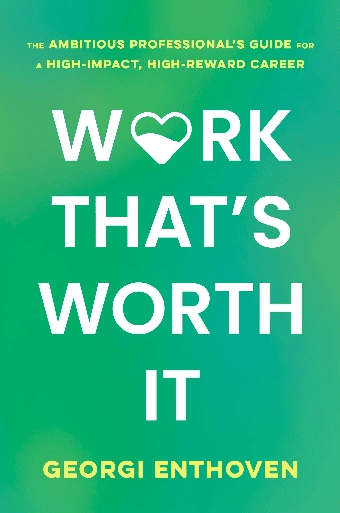
Ready to love your Mondays? Buy ‘Work That’s Worth It’ now – Amazon, B&N, Bookshop.org OR, need more convincing? Get the first chapters FREE here.
SHARE THIS EPISODE


12 Aug 2025
SEASON 1, EPISODE 37
Show Notes
After gaining confidence and learning “the language” of business through institutions like McKinsey and Columbia Business School, she discovered her calling in affordable housing finance and operations.
Now a COO at Catalyst, Annie leads market conversions that transform institutional multifamily properties into affordable housing using innovative capital structures, while exploring new models for renter wealth building.
She candidly discusses the “innovation tax” of doing something new in a traditional industry – the exciting but challenging reality of building systems from scratch without a playbook.
Key Financial Terms & Definitions
Market Conversions – The process of acquiring existing market-rate multifamily properties and converting them to affordable housing units
Tax-Exempt Bond Financing – Municipal bonds issued by government entities that provide lower-cost capital for affordable housing projects because the interest is exempt from federal taxes
Asset Management – The professional management of real estate investments to maximize returns and achieve specific objectives
P&L (Profit & Loss Statement) – A financial statement showing revenues, costs, and expenses over a specific period, particularly complex for multifamily properties due to multiple revenue streams and operating costs
Nonprofit Ownership Structure – A model where nonprofit organizations own real estate assets, often providing tax benefits like property tax exemptions
Cost of Capital – The cost of obtaining financing for real estate projects, which directly impacts the feasibility of affordable housing development
Key Points From This Episode
- Annie’s passion for housing began in architecture school, sparked by discovering unhoused residents at a museum design site, leading her to realize her stronger calling was social impact over pure design
- She strategically used prestigious institutions (Fulbright, McKinsey, MBA) not just for skills but to “learn the rules,” build networks, and rebrand herself professionally – describing it as “peeling back the curtain”
- The “confidence switch” moment in her 20s allowed her to move from following checklists to pursuing meaningful work aligned with her values
- At Catalyst, she focuses on capital innovation in housing – acquiring institutional multifamily properties and converting them to affordable housing through nonprofit ownership and tax-exempt financing
- Her COO role involves building corporate functions from scratch at a startup, requiring constant balance between strategic vision and detailed execution – calling it the “innovation tax” of doing something new in a traditional industry
Links Mentioned in Today’s Episode
Transcription
Annie: [00:00:00] I was in a summer studio at the GSD, this was at Harvard and was doing our final crit. We were supposed to do like a museum design on this new site on another part of Boston, and we had done the site visit and I went to go to the site and found that there were actually a whole series of, it was a community of unhoused residents there and sort of filtering in and around the site.
Annie: And I was so struck by the fact that I was. Here to design a museum when there was a real social need happening at this site. Came back, had designed this entire museum around how to serve these folks who needed housing, and I think the reaction from my crit crew was like, this is so strange. You don’t really belong in this architecture program.
Georgi: Did you know the average person will work 90,000 hours in their lifetime? What if you could use those hours to find fulfillment and become a disruptor for good? Welcome to the work That’s Worth It. Podcast. I’m Georgi Enthoven, and I’m here to demonstrate that an ambitious, meaningful, and rewarding career [00:01:00] is not just a dream.
Georgi: It’s achievable. Each episode will dive into conversations with global change makers who crack the code on combining income and impact. If you’ve ever felt like you were torn between a paycheck and your purpose, or maybe you simply yearn for more purpose, you’re going to be exposed to the ambitious humans who have done it themselves ready to make your work worth it.
Georgi: Let’s get started.
Georgi: I can’t wait to introduce you to Annie Koo. She is the COO of Catalyst Housing Group. A housing and asset management firm focused on creating and delivering new models for affordability. Annie’s career in housing innovation has spanned public and private sector organizations, including Sidewalk Labs, McKinsey, and New York City Department of Housing Preservation and Development.
Georgi: Beyond hearing from another disruptor for good, someone building a career around what’s good for her [00:02:00] and what’s good for the world, I want to share a behind the scenes story. On this podcast, I really value being able to shine a light on wonderful people doing important work in the world. But as I learn to become a better podcast host, I’m also trying to leverage my skills to be able to pick up the beyond the resume conversations that give you a fuller picture of the people I feature as guests, because that is what you may just relate to more in the end.
Georgi: A week ago, Annie and I met to record this episode about 20 minutes in. Annie just stopped me and said it wasn’t working. She shoulder the blame in that moment, but the truth was neither of us was in the right mindset for the interview that day. We both found ourselves in rabbit holes, missing the main points.
Georgi: The reason I’m telling you this story is that as soon as she stopped me and shared what she was experiencing, the bond between us instantly grew. We have to remember we are human. We don’t always show up ready to shine for what we have [00:03:00] assigned on our calendar that day. And the stumbles are part of life on resumes.
Georgi: We only showcase the best of us or how the world can interpret the best of us, but that can miss the human touch. So naturally these career conversations can seem a little resume like. This vulnerable moment took us off that track and suddenly we were two women side by side understanding each other for the first time in 20 minutes, we agreed we both wanted a redo and set a date for a week later.
Georgi: Today is that week later version, and it was so much better for both of us. Rarely do we show each other what’s behind the curtain, but this reminded me that what I like most of all is authentic connection and meeting people who care. Thanks, Annie, for the unexpected lesson. Annie, lovely to have you on the work that’s worth it.
Georgi: Podcast.
Annie: I’m so glad to be here. Thanks for having me.
Georgi: Yeah. I want to jump in and talk about your background, but it looks like housing or [00:04:00] buildings has been a thread throughout your career. Can you share where that started and why it captured you?
Annie: For sure, and I will say what I feel like when I started out, housing was not as hip and the topic of the day as it is now.
Annie: So that was not by design, but I would say my interest in housing really started with architecture. I discovered architecture when I went to college. I had no background. I grew up in South Texas. It wasn’t something that I did or knew or knew any architects. But I was really fascinated by architecture and social impact.
Annie: Just sort of given my family. My parents are clinicians in community health and I would say I just like stumbled into it. So architecture and social impact. I kind of just followed word association. I, I studied architecture, you know, hurricane Katrina happened at the time. I followed down a thread of disaster relief for a bit.
Annie: Did urban planning classes, worked at an urban planning firm, so kind of just followed this thread of those two fields. Eventually made my way to housing, but I was a really odd fit for architecture [00:05:00] for a bit. I just remember this moment when I was in a summer studio at the GSD, this was at Harvard and was doing our final crit.
Annie: We were supposed to do like a museum design on this new site on another part of Boston, and we had done this site visit and I went to go to the site. And found that there were actually a whole series of, there’s a community of unhoused residents there and sort of filtering in and around the site. And I was so struck by the fact that I was here to design a museum when there was a real social need happening at this site.
Annie: Came back, had designed this entire museum around how to serve these folks who needed housing, and I think the reaction from my crit crew was like. This is so strange. You don’t really belong in this architecture program. Like this is cool concept, but not very good at design. So I guess in short, I was not very good at architecture and I had a really stronger sort of mission and sort of passion for the social impact side.
Annie: So that led me to housing and sort of, yeah, that’s where it started.
Georgi: What an interesting story. I did notice also, you have a [00:06:00] very strong resume of recognizable accolades and opportunities that you have put in quotes, collected. I was wondering if you can talk about your Fulbright, ve, and also McKinsey, and how those experience shaped you and helped you.
Georgi: Sure.
Annie: Similar to the first one, I don’t think I had a plan or a design. And I think also today it’s, it’s funny to hear you say some of those names. I feel like we should all be somewhat skeptical of institutions today. I think all of these are either going through a reckoning, have been through a reckoning, so I, I will just open with that, but.
Annie: For me, I, you know, I graduated college. I grew up in McAllen, Texas, as I think I mentioned, where I didn’t have sort of a strong grounding of some of the like standard professional paths. I just, I didn’t have that as a foundation. And so when I graduated I had all these, like, interesting classes. We were studying race and gender, and everyone that I, I just looked sideways and everyone suddenly was recruiting for banks and consulting firms, and I just, I had no idea.
Annie: Like I knew there was some rule set that I was just not privy [00:07:00] to, so I would say. I sought out to learn those rules and that led me eventually to what you just mentioned, sort of I worked at the city and then for the city of New York in an urban fellows program, ended up at Fulbright, ended at McKinsey, and there’s sort of ended up on a path.
Annie: But the one thing I’ll say is that as someone who didn’t understand the rules, I think programs and institutions like that are very helpful. Like I did not have the network, so it opened doors. It also helped me learn a skillset when I was at McKinsey for something that I think I just wouldn’t have otherwise gotten a skillset in.
Annie: They often have programs that are really helpful to just learn and be mentored. And then thirdly, I think like the very important thing about institutions like that is it also helped me personally rebrand, in particular an MBA program. I had spent time in government and in academia as as a Fulbright fellow.
Annie: And so it allowed me to just rebrand even if some of that wasn’t, I didn’t actually have the hard accounting skills that came out of an MB. It suggested as such, and so to me, those like sort of three, like the ability to open doors, but also [00:08:00] learn skills and rebrand. That was the rationale for me to sort of join some of those institutions.
Annie: But I’m happy to talk about each one of them, if that’s helpful.
Georgi: Yeah, no, I think that’s really helpful. The idea that it sort of broadened how you could present yourself and the rooms that you could get into and maybe even part of your own confidence to follow. What was interesting for you.
Annie: Oh, totally. I remember this moment in NBA where I was like, oh, I have peeled back the curtain on how this works.
Annie: And I was like, I have seen behind the curtain and I can do the curtain. And it was like, there’s nothing secret about it. It was just learning the language and like getting past some imposter syndrome. That’s such a good point. I think it was as much for me as it was for what it represented for others.
Georgi: Yeah. I love that you just said that because when I have coached young people, I find that at some point, usually in their twenties, something switches and I call it the confidence switch. And once that has turned on. You are able then to have the freedom to start really thinking [00:09:00] about what you may want to be, how you want to spend your time, versus just continuing to follow checklists and paths that maybe other people have deemed impressive or worthy.
Annie: I think that’s so relevant, especially in housing in my field. I love taking initial chats with folks who are earlier on in their career and looking to figure out how to chart a path. And I think the number one sort of fear or anxiety that I hear about is the financial toolkit. Yeah. Finance modeling, it kind of morphs into like math and modeling.
Annie: I think no one has a perfect sort of sense of what that is, and I always just encourage, go to the setting where you’ll learn that or be exposed to it and just learn the language because it’s like anything else. You can do it. You can learn it. You just need exposure.
Georgi: Yeah. Yeah. So I would love to hear more about where you are now you work at Catalyst.
Georgi: I’m curious about what the company does and the gap that it fills.
Annie: Sure. Well, speaking of that sort of confidence thing that I needed to get over, [00:10:00] I had a lot of seats in housing before I got to Catalyst. I spent some time doing my tour of duty in sort of government, more in a developer seat technology when I was at Sidewalk Labs, at a nonprofit lender and sort of had a cross section of housing roles.
Annie: But at some point I had this realization that to me, innovation in housing was really going to be about capital innovation and how do we reduce the cost of finance, the cost to build, the cost to operate housing, and those, that sort of confluence of ideas really led me to catalyst. So who is Catalyst?
Annie: Catalyst is an asset management firm. We have a portfolio of about 4,000 units in California of low and moderate income housing. And what we do that’s a little bit different is we do market conversions. So on behalf of mission-driven owners, we help acquire institutional multifamily and convert it to affordable units.
Annie: We do that by incubating these new structures, whether it’s tax exempt bond financing, nonprofit ownership, governmental ownership, in order to [00:11:00] lower the cost of capital to do that. And ultimately, and sort of what really brought me to Catalyst was thinking through ways to unlock even more economic mobility.
Annie: So thinking about. New renter wealth models in sort of the vein of guaranteed income programs and otherwise, how can we think of housing and harnessing real estate value as a way to really create value for renters that you don’t have to be an owner to do that. I’m happy to talk more about an example, because I feel like that’s like a lot of buzzy words, but I’m happy to talk about one of our most recent projects, if that’s helpful.
Georgi: Yeah. I mean, it’s so interesting when you’re thinking about when you were designing the museum and you were concerned about the housing, and now it sounds like you’re actually able to make that tangible. But yes. Can you talk about something specific that you can share?
Annie: Sure. One of our most recent projects, which we acquired on behalf of our nonprofit Catalyst Impact Fund, about a year and a half ago, was a downtown 168 unit building in downtown San Jose.
Annie: And through nonprofit ownership, it benefits from things like [00:12:00] a welfare tax exemption in the state of California. We use tax exempt bonds, and ultimately the goal is, and we’re sort of a year and a half into the cycle of converting this and income qualifying affordable households ultimately have big plans for this, but I think between a very strong resident services program that we have there, but really just.
Annie: Tackling the affordable housing side first is really meant to be this sort of flagship project for us. But what you were just talking about, like where I started in housing and where I am today. Oh, that seems like a funny Instagram thing that I should probably do one of these, but I feel like what I’m most excited about at Catalyst is is the operating side.
Annie: There’s this really big gulf in housing, I think, between what we talk about on the policy side and what it actually takes to do. And so being able to get closer to the guts of what it takes to. How much does it cost to do this? What does it really take to run one of the most complicated p and ls, which is I think like a multifamily asset, and really getting into that is pretty interesting.
Georgi: Yeah, so actually getting into the nitty gritty [00:13:00] is exciting for you and compared to something like McKinsey, which is you can do the theory and you can run the models and have the ideas, but having your hands in it and actually seeing can you translate this into action is exciting.
Annie: Yes. No better example, certainly on the housing front, but McKinsey, I, I spent a lot of time in the ops practice thinking about what does a transformation look like in a large place?
Annie: What does fantastic ops look like? And I still joke with a friend from McKinsey. We’re like, we thought our clients were just not working very hard. You know, like you just thought all of these things at the time. And it’s like, it is so hard to actually be an operator and what you’re sort of like firefighting all the time that it is very hard.
Annie: And I’ve been walloped.
Georgi: Well that leads me to the next question ’cause I know that your title is COO and I was hoping that you can share what that means in general and also for you.
Annie: Sure. I’ll start by, I didn’t, I didn’t intend to be here. I think I sort of alluded to this, but I really joined Catalyst because I thought it was a very interesting, [00:14:00] smaller place to be at.
Annie: But through a series of changes on our team, sort of landed in this role. And I think one of the first things I’ll say about COO is that, I don’t mean to sort of be self-deprecating, but it is, it’s very different in a smaller startup setting versus an institutional setting. I think it’s much more exciting in a startup setting, but it is small.
Annie: But the nature of the game is building like, oh, I say, oh, I, you know, we need x new metric system. Like, well, I’m, I’m gonna be the one building it. And so it’s really this. At McKinsey and sort of in other places that I’ve been, you’re chasing interesting problems, like what is the hardest thing to work on, but it’s not necessarily always there.
Annie: This is the hardest job I’ve probably ever had, but also the most exciting from building corporate functions from scratch to yes, like figuring out how everyone will play together on the team. It’s this really, I’d say, frustrating balance of execution and strategy and always figuring out the right balance between those, because I can go.
Annie: Super, super deep. As I have found my, I think my MBTI has changed just by [00:15:00] being on this job and partnering with our CEO and other, you know, leadership team, which I think are strong visionaries, but there’s so much depth to like, how do you actually implement? And so becoming that I am the detail sort of execution person, so that has been very fascinating.
Georgi: Yeah. It’s such an interesting contrast that you’ve had in your career, although you have the thread of housing, but it’s also, you know, from being very high up and theoretical to having your hands really deep into the nitty gritty. And I’m imagining also that your role is just constantly changing given the projects that you’ve mentioned.
Georgi: And how is that for you? Do you like this change of what each day looks like?
Annie: You know, it’s like constantly breaching the next plateau where I think I’ve, oh, we’ve built it and then like, oh, we absolutely haven’t. You like find the next thing that is missing. I think the biggest struggle for me though is like hitting it at the right altitude.
Annie: At a place where we are small. It is figuring out, I continuously want to just be a better manager. We get to [00:16:00] something new and I’m deep in the weeds and then sort of can hand it off or put it in the right team and then there’s the next thing. I need to really pull myself back from being so deep all the time.
Annie: Yeah. So I think like, um, it’s hard at a place where there aren’t clear roles, but that’s also one of the most exciting. Things about startup.
Georgi: Yeah. And it sounds like the challenge of what you do is part of the excitement and benefit. Yes.
Annie: That’s positive. Very. It’s challenging, but exciting, frustrating. Yes.
Annie: Yeah. We joke, we call it the innovation tax. Doing something new in a space that has done things one way for a very long time, has just these hidden pockets of, yes, exciting problems, but also, man, I just wish there was like a playbook for this.
Georgi: Yeah. Yeah. Well, I would like to end with a question about looking back at your career today, what makes it all worth it for you?
Annie: I have this memory, right? When I graduated MBA, I went on a trip with a very close friend and we were just [00:17:00] young. We were, we were not married, we didn’t have kids. And we just said like, we had all these questions about like, how do you make it, how do you balance career with family? Like, we just wanna like stick it out.
Annie: And for me, it’s been very interesting. I have a five-year-old son. For me, I just know it’s worth it because I love going to work every day, but I also, the only thing that I will turn off as a somewhat natural workaholic is for my family, and so being able to do both and also feel good about what I do.
Annie: My son is only five and has so many questions about what I do. He’s, I think he thinks I’m both an architect and like a construction worker, but I feel this sense of. Satisfaction in what I’m doing, but also balance by doing both.
Georgi: Yeah, you really are a five-year-old’s hero. But I read a quote this week, and I’m not gonna phrase it perfectly, but it said, success is when you look forward to work and you look forward to coming home.
Georgi: And from what you’ve just said, it sounds like you know, whether you’re at work or home. It’s exciting and it’s, [00:18:00] you know, a place you want to be and spend your time.
Annie: Yeah, that really resonates and I feel like it wouldn’t have resonated when I started my career as like a hard line must do it all, but it is that sort of balance that I think makes it worth it.
Annie: That’s a great point. Yeah.
Georgi: Well, thanks so much for sharing all your insights on housing and your journey. Just a pleasure to have you here on the podcast and I’m look forward to keeping in touch. Thanks for what you do, Georgi. Let’s jump into the takeaways. First, let’s talk about the confidence switch.
Georgi: At some point in your career, you will learn the language of your industry and gain the confidence you need to transform your career from following other people’s checklists to pursuing what genuinely interests you. The moment when you realize there’s nothing secret about success, you just need exposure and to get past imposter syndrome.
Georgi: The second key point I want you to take away is Annie’s interesting concept that she shared about the innovation tax, [00:19:00] meaning the hidden cost and challenges of doing something new in traditional industries, it’s exciting to solve problems that haven’t been solved before, but there’s no playbook. You constantly are building systems from scratch and hitting unexpected obstacles, and that’s a wrap for today’s episode of work That’s worth it.
Georgi: Remember, every conversation we share is designed to empower you to build a career that’s truly worth your time and energy. There are future disruptors out there just like you, who would appreciate the conversations in this podcast. Please support me by spreading the word and sharing this episode with a friend or two.
Georgi: Or visit my website@georgienthoven.com. That’s spelled G-E-O-R-G-I-E-N-T-H-O-V-E n.com. Until next time, ask yourself, what problems am I solving and are they worth my valuable time? Your intentional choices today can lead to exponential impact tomorrow.
Thanks for [00:20:00] listening.


GET GEORGI'S BOOK
Meet Georgi Enthoven
As the visionary founder of Work That’s Worth It, Georgi specializes in unearthing the unique inspiration and career desires of those seeking significance both for themselves and for the world.