

About this episode
What if you had a great, financially lucrative job, but knew that something was missing? Anthony Koithra spent over a decade at Boston Consulting Group – one of the top three strategy firms – working on massive national projects, all while making films on weekends and recruiting 20 colleagues for a 48-hour film festival.
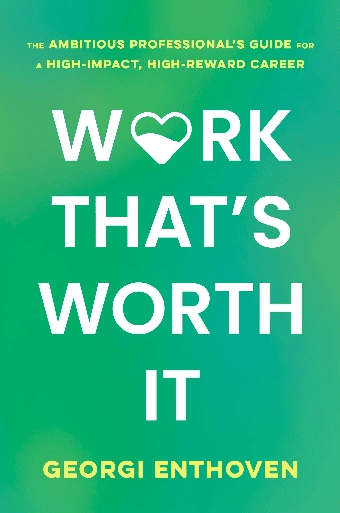
Ready to love your Mondays? Buy ‘Work That’s Worth It’ now – Amazon, B&N, Bookshop.org OR, need more convincing? Get the first chapters FREE here.
SHARE THIS EPISODE


08 July 2025
SEASON 1, EPISODE 33
Show Notes
In this honest conversation, Anthony reveals the real grind of consulting life: living out of suitcases, working in airport offices for European airlines, and the constant tension between financial security and creative fulfillment.
Anthony shares how he finally made the leap from a lucrative partner track to full-time animation, why he calls creativity “the hobby that wouldn’t die,” and his advice for having multiple careers over his working life.
If you’ve ever felt trapped between what you “should” do and what sets your soul on fire, this episode will give you permission to take the scenic route—and maybe even a roadmap for how to weave in and fund your creative dreams along the way.
Key Points From This Episode
- Anthony’s journey from engineering to animated filmmaking shows how creative passions can be pursued alongside traditional career paths, even when growing up in cultures that emphasize “responsible” careers like engineering, medicine, and law.
- The 2008 financial crisis forced career flexibility, leading him from New York to Dubai when US opportunities were limited, ultimately teaching him to turn disadvantages into advantages.
- His consulting experience at BCG provided valuable skills in storytelling, visual communication, and running professional services businesses that now inform his creative work.
- Building financial runway through corporate careers while keeping lifestyle inflation low was key to his successful transition to full-time animation.
- People can easily have 5-6 different careers over a working lifetime – Anthony spent 12 years in consulting and became an expert, but emphasizes careers can have multiple phases.
- His animated films focus on outsider perspectives and immigrant experiences, using genre settings like robots and vampires to explore themes of empathy and belonging.
- Real-time animation in game engines like Unreal and Unity has democratized filmmaking, allowing solo creators to do work that previously required teams of 400-600 people.
- Anthony distinguishes between learning environments (which he found less engaging) and earning/making environments (where he thrived through project-based work). • Despite being naturally risk-averse, he found ways to take calculated risks by building financial security first, then gradually transitioning to creative work.
- Having a supportive partner who encourages creative pursuits was essential to his ability to make the career transition successfully.
Links Mentioned in Today’s Episode
Transcription
Anthony: [00:00:00] I describe it as the hobby that wouldn’t die, and it was something that was just not possible to do nights and weekends. I had tried doing it, but I had a pretty senior job and there’s not a lot of free time. And consulting in general is intense hours. I just didn’t have the time to do it. And as an indie solo animator, I’m literally trying to do 20 to 30 different people’s jobs.
Anthony: Like in a conventional studio, you’d have a bunch of different people doing each of these jobs. That’s why. It takes 400 to 600 people to make a studio animated feature and doing it all by yourself. I’m not good at any of them, but I’m doing kind of crap versions of each of them and putting them all together.
Anthony: It’s just, it’s not the kind of thing you can do.
Georgi: Did you know the average person will work 90,000 hours in their lifetime? What if you could use those hours to find fulfillment and become a disruptor for good? Welcome to the work That’s Worth It. Podcast. I’m Georgi Enthoven, and I’m here to demonstrate that an ambitious, meaningful, and rewarding career is not just a dream.
Georgi: It’s achievable. [00:01:00] Each episode will dive into conversations with global change makers who crack the code on combining income and impact. If you’ve ever felt like you were torn between a paycheck and your purpose, or maybe you simply yearn for more purpose, you’re going to be exposed to the ambitious humans who have done it themselves ready to make your work worth it.
Georgi: Let’s get started.
Georgi: Today I have Anthony Koithra on the show, a consultant turn animator. But before we dive in a little backstory, sometimes I find the not yet figured it all out part of the story. So relatable and interesting. Anton’s experience is not overtly focused on impact per se, but I wanted him on the show for a particular reason.
Georgi: I. If you’ve been listening in, you may remember that I recently did my first solo episode number 27 and shared with you a question I got from students at Stanford, but it boiled [00:02:00] down to judging others’ career choices. The students use language such as sellout for their peers, taking jobs in consulting firms, banks, and big tech.
Georgi: But maybe because I have many years under my belt already, or maybe because I take the long view, a career journey is not a purity test, and many nuance factors are at play at any given time. Through many conversations that I’ve had, I’ve found that the sellout jobs have often given an important launching pad for the impact later on.
Georgi: So today I want you to listen to Antony’s story to understand more about the choices he made along the way, involving a decade at Boston Consulting Group, one of the top three strategy consulting firms in the world, working his way up to MD and partner. And through consulting, he built up a financial cushion that now gives him the freedom at this more seasoned stage of his career to jump in a hundred percent to nurture what he calls the hobby that wouldn’t die.
Georgi: Anthony [00:03:00] is now a full stack indie animated filmmaker who creates sci-fi and fantasy stories about robots, aliens, and vampires. But from an immigrant perspective, confronting accepted narratives about how we live in a multicultural society. I. He made what he calls responsible career choices, and there’s no judgment here.
Georgi: Sometimes you need the money, the skills, or the financial runway that eventually gives you the freedom to take bigger risks. What’s particularly interesting is how an Anthony jumped off the lucrative consulting letter to pay attention to his career desires. And that’s hard to do. So if you’ve ever wondered what it’s really like inside one of those prestigious consulting firms, or you’re trying to balance financial responsibility with creative calling, this conversation will show you that sometimes the scenic route through your 90,000 career hours is exactly the right path as long as you stay awake to where the magic wants to emerge.
Georgi: Anthony, lovely to have you on the work that’s worth it. [00:04:00] Podcast.
Anthony: So nice to be here. Thank you for having me.
Georgi: Yeah. Well, we have so many fun things to talk about. It’s wonderful to have somebody creative on the podcast, and I know that we’ll get to animated film, but I would love to jump into how you got started in your career.
Anthony: Sure. Yeah. It’s kind of a weird story considering I ended up making animated films, but I started out, I grew up in India and growing up in India you have various responsible career paths and education routes that you would take to get there. And so, you know, there’s doctors and engineers and lawyers and so on.
Anthony: And I was always pretty good at math, so I did engineering and I studied engineering in Singapore at National University there. And then I always had this thing of like. I always loved making films and telling stories and things like that. I just never really saw that as a viable career path or a predictable career path that would make me a living wage.
Anthony: Right. Like the risk, it
Georgi: wasn’t on the menu. Yeah,
Anthony: like the risk [00:05:00] levels just seems too high and I’m, I am a pretty risk averse person, and so I did engineering and then ended up going and working at a bank, which, you know how you make career decisions out of college and you have. Absolutely. When you think back on the 20 years later, you’re like, that was a really dumb reason to make that career decision and spend.
Anthony: So
Georgi: what was the reason? What happened? I’ll tell
Anthony: you, Deutsche Bank came recruiting on campus and they had a three month training program in London. I was like, that sounds like a lot of fun. I wanna do that. And so I, I signed on because there was, you know, I’d get to spend three months in London and don’t get me wrong, that was a lot of fun.
Anthony: It is just a silly reason to choose a career path that I ended up. Doing for like four years. I worked in Singapore for a few years and then moved to Japan ’cause our team there was understaffed and all wonderful experiences. I loved being in Japan, but I continuously had this thing of like, I love telling stories, I love movies, I love film, and so I.
Anthony: I was like, what is the way in which I can do that kind of [00:06:00] thing but still have a responsible job, right? Like where I’m making money.
Georgi: So early on you already knew that something was missing.
Anthony: Yeah, kind of. And I used to fill it the way I think a lot of people fill it, which is like through hobbies, right?
Anthony: So, okay. All through college and all through my time in Singapore and Japan, I was making little films and like a couple of animations and things like that, or put ’em in festivals. I had like a short film that won a National Geographic. Competition, a bunch of like small things. I had like recruit my friends and we’d make weird little films with radio control cars and stuff like that.
Anthony: And I, I loved doing that kind of thing. It was just, you know, it was my hobby, it was the thing that I did on the side and then kept looking for ways to like tie I. My responsible day job that made me money to something that was just mildly more exciting than working at a bank.
Georgi: Yeah, I mean, for a lot of people experience this, but going from learning, being in an education environment to earning, obviously where you have an [00:07:00] income and you’re working.
Georgi: For a company or building a company, it’s a difficult transition. And the learning environment that most of us experience doesn’t really prepare us well for what comes next. And there’s definitely interest
Anthony: to that. Yeah,
Georgi: yeah. Even sort of the questions to ask or the chance to experience something before you jump in.
Georgi: And so it sounds like you got into it because of prestige and the fact that it got you to a city that was interesting to you. And then one thing led to the next, and now you’re four years in.
Anthony: Yeah. I mean, it’s interesting you say that the difference between learning and earning environments, because my wife Laura always makes fun of me for this, but I don’t learn well in traditional environments.
Anthony: So like I used to skip a lot of class, like I studied by myself and I’d figure things out. But I like project-based learning. Like I liked learning things in order to do something. And so versus theory, right? Yeah. And so. Throughout school, I was really more interested in what I could do with the things that I was learning [00:08:00] versus learning them for learning’s sake.
Anthony: And so I was, you know, I’m very old, so this was part of like Web 1.0 in like 98, 99, and I found, I. Could earn more doing freelance web dev and web design projects than the people that were graduating two years ahead of me. And so I started doing so much of that. I was really neglecting some of my schoolwork and I eventually.
Anthony: Realigned and rebalanced and everything else, but it was one of those things where I was like, working is so much more interesting than studying.
Georgi: Okay. Because you like to get your hands in on the mix and be creative, obviously. Yeah.
Anthony: Like making things. Making things is my happy place. Yeah, right. Like whatever it is, whether it’s an animated film or building a software product or like building furniture, like making things as my happy.
Anthony: List. Yeah. It’s like therapy for me.
Georgi: But given your background of where you were being influenced by, I think family members, but also culturally and having a proper responsible, right. [00:09:00] Admirable job.
Anthony: Yeah.
Georgi: Where did you go next after banking?
Anthony: So I started looking for ways of. How do I bridge this? How do I work in entertainment in some way, like where I can make some money?
Anthony: And so I was looking at MBA programs because everybody was telling me I had to go get an MBA. And so NYU, they had an MBA program, which had a very strong entertainment media and technology track. I. And as it happened was right next to one of the best film schools in the world. So like Tisch is literally next door.
Anthony: And so I was like, oh, this’ll be great. I will go get an MBA and then go work at HBO. And while I’m there, I’m going to go and produce a bunch of shorts made by the next generation of great filmmakers coming outta Tisch. Perfect marriage
Georgi: case ideal. Maybe it sounds like even you would like to have gone to Tisch, but like you absolutely are going to get your MBA.
Anthony: Yeah. Well in fact, Tisch, there was a joint program, which several of my good friends ended up doing, like good friends now did do, which is called the Producers Program, where you did a three year program, partially at [00:10:00] Tisch and partially at Stern. I could not afford even the two year food that I did. And so a three year program plus the loss of wages and so on, just didn’t fit into my spreadsheet.
Anthony: And so I did the hack version of it, which is I went to Stern and then on the side I would produce films for. So I would like figure out logistics and like tried really hard and make my creative input me heard. So
Georgi: yes, for these make good friends over there.
Anthony: Exactly, which was very fun and I was able to do a certain amount of that.
Anthony: The part of the plan that did not work out was going and working at HBO, because somewhere in my first year of my MBII found out how much you got paid at HBO starting out and then compared that to my student loans and the math did not Math.
Georgi: I love that you share that because in all different industries, I have talked to people who have gotten themselves into graduate school programs hoping that it sort of gives them the opportunity to combine something or to take that next step.
Georgi: And then only [00:11:00] once they’re in the program do they research, okay, now what is the reality of that job that I’m aiming for? Right? And often being extremely surprised and disappointed. But now you’ve already got the student loans coming in. And so your story is not something unusual, which is,
Anthony: yeah, I think it’s fairly common.
Georgi: Yeah. But anyway, so now you’ve got student loans increasing and increasing and creativity bubbling. Yeah. And
Anthony: so at this point I was like, okay, I, maybe I let these creative dreams take a back seat for the moment because like from a financial perspective, this is, you know, I have to pay back these loans, but I also need to set up.
Anthony: Financially I need to set myself up in the future. And so I was like, well, investment banking I definitely don’t want to do because I came from a bank and I know what that’s like and I definitely don’t wanna go back and do that. But consulting seems kind of interesting because basically you’re, seems like you just brains for hire.
Anthony: Like you go in and do, figure out a problem, a really open-ended problem, and I’m good at [00:12:00] that. And so I interviewed for all of that. I did. However, I have made a habit of graduating into financial crises, both in 2002 and then in grad school. So if I ever go back to school for whatever reason, look out world.
Georgi: Yeah, watch out. We’ll just get the timing right and just send a mass email. Just let
Anthony: everybody know something’s coming. But yeah, so it sucked. It was, it was a terrible, which is
Georgi: probably the world. Saying to you like, we’re not gonna make this easy for you. Please go to the creative route. Well, you know, when
Anthony: you’re writing a story or a film, as you get into the second act, there’s a real danger of like stakes dropping because the audience is familiar with everything that’s happening.
Anthony: So you have to torture your protagonist. You have to like keep throwing things at them and just when it seems they can take no more, you have to toss something else into the mix. And so
Georgi: Well that makes a lot of sense. Yeah. What’s happening on Netflix? Yeah, yeah, exactly.
Anthony: So the formula continued and so, I mean, I got off lucky, frankly, like so many of my friends had people who had like multiple offers, like had offers rescinded.[00:13:00]
Anthony: It was a bad time. And so,
Georgi: and what happens, like to interject also because I graduated from Harvard Business School in 2001 and the sort of. Yeah. Dot com boom, at the time had crashed. And a lot of people do get offers and then what they either say is that they postpone those offers. Right, right. And say you can come work in nine months or a year.
Georgi: Yeah. Or they just flat out cancel the offer. Right. And so it’s very difficult, especially when you’ve turned down other opportunities.
Anthony: Exactly. Yeah. Plus student loans and so,
Georgi: yes.
Anthony: And
Georgi: so those don’t go away with the deal. Those don’t just
Anthony: disappear. And so, yes, it was rough and so I, especially as an international student, nobody in the US was hiring like it was fairly rough.
Anthony: And so I was like, how do I turn this disadvantage into an advantage? And it’s like, my one thing is I’m not tied to the us. Like I don’t have to work here. And so how do I, you know, I wanted to move to the US and like the NBA was, yeah, supposed to be part of that, but I was like, all right, maybe I take the long way around instead, [00:14:00] because for pure economic realities and the two places that we’re hiring like crazy was the Middle East and greater China.
Anthony: And I. Don’t speak Mandarin. And so I applied to the Dubai office of BCG and ended up going there. And so BC, G for anybody that knows, is a big consulting firm, big strategy consulting firm. So most people have heard of McKinsey. BCG is the, IS number two, sort of McKenzie, BC, G, and Bain. And so I went to BCG or the Boston Consulting Group, and I worked in the Dubai office for a few years and.
Anthony: It was not filmmaking. It was certainly not the entertainment industry. Most of the work was public sector. There’s some financial services type stuff, but the thing I did enjoy about it was as distinct from the stories I’d heard about consulting in the us, you know, when I’ve been doing recruiting, is instead of working on one small, tiny part of a business for like a business unit.
Anthony: You were working on the whole thing, it was just huge ’cause
Georgi: of your location. Exactly. ’cause of being in the Middle East. Okay. ’cause it
Anthony: was Dubai [00:15:00] and it was 2008, 2009, and it was all, Hey, we’ve got big ideas and big plans and a ton of money to make it happen. So like get crazy. And that was actually very fun.
Anthony: So what we would work on, things like. The strategy for like an entire country in the GCC, like think big 35 years, over 35 years. How big does our airport need to be? Questions like that. How should we develop our social welfare policy? Like how do we develop education plans for, uh, country of, you know, it’s things like that.
Anthony: Yeah.
Georgi: And just for context, how old are you at this point?
Anthony: I was 30 years old. I was exactly 30.
Georgi: Yeah, so 30 thinking of these massive big questions that are landing in your lap and, and there were
Anthony: younger people than me on the teams, like, you know, I entered the consulting and the post grad, like, so at that point there were undergrad students there as well, which is kind of the thing that people make fun of consulting for in many ways is like, yeah, oh, this 21-year-old is gonna tell me how to run my business.[00:16:00]
Anthony: And there’s some truth to that, right? Like it’s often very young, very inexperienced people that are put on these teams. My usual response is one. Having a fresh pair of eyes is never a bad thing, like asking some silly questions like, why is it done this way? Like, you know, innovation tends to come. Yeah, that tends to be where new ideas and new, new areas for growth come from.
Anthony: But also some of these people are very, very smart and they’ve got very experienced people are guiding them.
Georgi: Now I have a question. ’cause I talk to lots of people on campuses across the US mostly, and a lot of them, well the students come into the universities wanting to solve some big problem within the world and the admissions team to get into university.
Georgi: Really want to know what are your ambitions and how are you going to be a great human? And somewhere along the line. That aspiration is no longer fed, and the consulting firms and the banks and the big tech are on the other side ready to scoop up the students. And [00:17:00] a lot of the students feel betrayed by that and will call people who go into consulting as sellouts.
Georgi: Yeah, and in my experience, having interviewed lots of people who have done amazing things in the world, often banking and consulting or big tech are wonderful stepping stones to create the magic. That they later come in to do. And I wonder if you can talk a little bit about that, like the pressure you felt or maybe there was no pressure ’cause it was a bad market and you took what you got and hoped for the best.
Georgi: But if you can talk a little bit about that sort of narrow funnel that’s sort of pushing you into these jobs, and obviously it sounds like. You got a pretty interesting experience, but
Anthony: yeah, absolutely. I can completely understand that perspective. I will say as an international student with no job prospects, in 2009, I was very happy to land on a job and you know my, on that back account and student loans and everything else I’ve talked about.
Anthony: So call it
Georgi: what you will. I’m taking it. If
Anthony: that means I’m a sellout. I’m a sellout. I’ll sell out seven times before [00:18:00] Sunday. Again, I think. Like similar to what I was saying about learning and earning environments. To me, again, this is an area where Laura, who you’ve spoken to before, my wife and myself are quite different in that she was always on the dean’s list.
Anthony: She like went to every class and did everything else. Once I got a job offer, I spent my second year of business school making an insane 200 person musical. Video viewed with all of my classmates that we played at the annual Follies. I think I did that almost full-time. Right. Wow. Which is stupid, but also very fun.
Anthony: Well, you were
Georgi: captivated by something.
Anthony: It was fun and I had a path.
Georgi: Yeah.
Anthony: And it was very clear to me I was not going to get. A job that competed with that, you know, in any,
Georgi: so this in a way was like the last meal before you went on a diet. Yeah, kind of almost exactly that. I was like, this
Anthony: is my last chance to have some fun before ind.
Anthony: Before you’re indulgent. Yeah. Yeah, exactly. Before I go into the meat grinder, and there was definitely truth, like my first two years in consulting. Like there were interesting [00:19:00] projects. There was also some terrible projects, like some absolutely awful ones where I didn’t know what I was doing. It was an industry that I wasn’t interested in.
Georgi: It’s like a bit soul crushing to be doing that. Yeah.
Anthony: I mean, frankly, every day was torture, right? Like it was, it just sucked. Yeah. Plus the grind of consulting, which I think people don’t talk about as much, which is, yeah. So
Georgi: what is it, tell us about the grind of consulting. What’s the reality of. Being a consultant,
Anthony: the thing of like working on big problems and working with very smart people and all of that is very true for me.
Anthony: I think one of the things that I had difficulty adjusting to was just not living in one place or not having any kind of stability because I. The week in Dubai is Sunday to Thursday versus Monday to Friday, right? ’cause Friday is like the big day off, and so on Sunday morning you’d fly out to where I never did a single case that was local to Dubai.
Anthony: So I’d fly out to Bahrain or Saudi Arabia or Qatar or wherever. You’d fly out on Sunday morning and then on Wednesday evening [00:20:00] you would come back. And you’d spend one day in the office and you’d have the weekend at home, and then Sunday morning you’d fly out again. So you spent very little time in one place.
Anthony: You basically live out of a box, and this is true in the vast majority of consulting work.
Georgi: And tell us also, it’s not like, oh, fun. You get to travel because you’re flying and then going to a box and sitting in an office probably like the majority of the day, and then going home to your hotel to sleep.
Anthony: Yeah, the worst version I’ve ever done of that was where I had a client that was a major European airline and their office was in the airport. And so I literally would fly into this airport, live there for four days, and then fly back to New York. And that’s sucked. Like this is also not the most exciting city in Europe.
Anthony: So even if I left, yeah, but this is the other thing about the consulting grind is like you work. Pretty intense hours, and depending on the team you’ve got and the leadership on that team, sometimes it’s more [00:21:00] efficient and there’s less wasted work. Yeah. Sometimes there’s a lot of wasted work and you’re working really long hours for.
Anthony: Not good reasons.
Georgi: Yeah. And you are a creative person, obviously. Could you bring any of that creativity to the table, or did you really just have to follow a system and a process and say, okay, this is to pay off my debt, but at some point I’ll get to scratch that itch?
Anthony: Totally. So yes and no. So the yes that I will say is that.
Anthony: I always tended to have weird ideas, and I often found willing ears for those weird ideas because in consulting you’re kind of always trying to provide more than the expected answer, right? Like you’re trying to provide a different perspective. And so frequently I would have unusual solutions and I, I usually found pretty willing listening ears for that.
Anthony: And so there was that aspect, but there was also, this will sound silly, but I make. Really great, beautiful slides and PowerPoint. PowerPoint has like this [00:22:00] horrible reputation in general. Everybody hates PowerPoint, but like a good deck tells a good story. Yeah. I literally do a guest lecture at NYU about how to tell taking the lessons of film, TV and books and applying them to how you tell business stories because it’s the same structure.
Anthony: There are very similar rules and. The visuals for how you communicate that story, whether, whether it’s infographic type stuff or a mix of words and visuals and things like, like all that kind of stuff does have, like the design aspect of that type of business story does actually have a material impact on its effectiveness.
Anthony: I.
Georgi: Well, I’m so curious also to get your input on, as AI is taking over a lot of the intellect of jobs and they obviously us against a computer, is there’s just no way we can compete. But humans do have this creative. I think creativity and curiosity and compassion are sort of what can differentiate us.
Georgi: And I’m wondering also [00:23:00] if you have advice for young people to lean into their odd. Unique, interesting aspects and follow those, even if it’s alongside a career path that can pay to be differentiated.
Anthony: Yeah. I have consistently found that the things that I thought were weaknesses or weird about me could be applied in ways that made them strengths or differentiators, and usually that came from.
Anthony: A shift in perspective, right? It would be like, well, I can’t do that that way. And that’s kind of what everybody else does. And if I try to compete like that, I’m going to lose no question about it. But if I change the game, if I make the game something else and force them to compete or like. On my dimension, yes.
Anthony: Change
Georgi: the story line, change the
Anthony: story, change the narrative. Then not only do I have an advantage, but I’m so far ahead of everybody else [00:24:00] that like there’s a clear winner and so, and often like that’s easier said than done. Like that can sound a little trite. Often it’s several years of grinding and not being able to make that happen, and then suddenly an opportunity comes along where you are able to do that.
Anthony: I can give you an example of that. So I was in Dubai for several years. About a year and a half in, I will say, I did not enjoy living in Dubai for several reasons. A big part of which was I didn’t feel like even outside of work, I didn’t feel like my creative, I. Side was nourished very much. And part of that is because the vast majority of people that look like outsiders that come to live in Dubai are driven primarily by profit motive.
Anthony: Like the whole setup is, it’s set up like that, right? I’m sure things are different and have evolved now, but this I’m talking about when I was there, and that was definitely true of the vast majority of my colleagues. I will say there were exceptions because at some, at one point, I think after I’d been there for three years, I got.
Anthony: I think about 20 of my [00:25:00] colleagues to participate in the 48 hour film Festival. Have, do you, have you heard of this? Okay. This is like literally you get a set of prompts at the beginning of a weekend, and then you have to write, shoot, edit, score, an original short film in 48 hours. I. We ended up coming second in Dubai, which for a group of not filmmakers, like none of these people had ever made a film before, was quite something.
Anthony: I attribute it in large part to the fact the work ethic that was there. Because with consultants who were like, well of course we’re not sleeping the week
Georgi: and they wanna win. Yes, but everybody wanted to win.
Anthony: Exactly. So there were exceptions, but I, I decided fairly quickly, I was like, I don’t want to be here very much longer.
Anthony: And like I said, I wanted to move to the US and so I applied to the LA office of BCG for. A transfer. ’cause LA was where, you know, we didn’t,
Georgi: more media. More media and entertainment work and so
Anthony: on. And the administrative head of that, that office who is now a close friend, rejected me three times and I’ve, you know, continuously, I’ve given her so much crap about, about it since.
Anthony: But initially I [00:26:00] remember being told that I was like a high volatility candidate, like, because I’d had some very good ratings and some not so good ratings and so on.
Georgi: Yeah. Sounds like if you’re interested, you’re all in. And if you’re not interested, it’s a grind.
Anthony: Exactly.
Georgi: So let’s get to animated film, like, so how did you get the switch?
Anthony: So there’s still a little bit, there’s like eight years during which I moved to the LA office, and then right around that time was when there were these discussions of starting a new part of the consulting business, which ended up being digital ventures. And that was like almost a version of consulting that was tailor made for my particular skillset because it was disrupt by default.
Anthony: It was like. How do you help a big Fortune 100 company build the disruptive business that’s going to eat its lunch at some point in the future? So it’s like, how do you look at the business in a different way? What is the three person in a garage startup that’s going to completely disrupt this business?
Anthony: Right. And so this was like. Innovation consulting is not something new anymore, but like in 2013 [00:27:00] it was like nothing else existed like that. And so we hired the first engineers, designers, everything else. So
Georgi: that got you back to la.
Anthony: So I had just moved to, I had eventually they said yes and I’d moved to LA and that was when they started talking about setting up this business.
Anthony: And so I ended up being employee zero of this new business. And there were a whole bunch of other folks like I, I was, I was a small part of the founding team of this group, but we ended up growing to. Over a thousand people over the course of the next few years. We grew way too fast. We like made every mistake possible along the way, but it ended up being the fastest growing new business in BC G’S history.
Anthony: We ended up launching over 200 companies over the course of several years. It was a very, very, very successful business. It’s now part of what’s called BCGX, which is BCGs kind of innovation and build element. But so I did that for. Eight years and I made partner in 2017. I would not have made partner in the traditional business like I was just too weird to do that.
Anthony: But this [00:28:00] business, I was the right, kind of weird and yeah, I, it ended up being I. Creative enough that I felt partially fed, but also very much a kind of exciting new growth business. And so, you know, very monetarily lucrative as well for the company. Yeah. And so I did that for a while and then I. By 2020, I had been doing what I used to call basically two jobs from 2014 when we launched DV to 2020.
Anthony: For those six years, I’d more or less been doing two jobs, which is all the work itself, like the, you know, the consulting services and serving clients, but also building this new. Business and like figuring out how do we, what does our career development look like? ’cause it can’t look like regular B, C, G, uh, how do we hire because the people we need are different from regular, you know?
Anthony: So there was this whole, it was literally two jobs and it was really burned out. And so I took a year off in 2020. I took a sabbatical in 2020, which, you know, is one of those wonderful things that consulting firms let you do every [00:29:00] now and then, you know, because it is a kind of. Almost gig based kind of thing.
Anthony: Like you can go away project to project. Uh, anyway, so I went away for a year and I experimented with like what I might wanna do next. So I, again, in my most risk averse possible way, I had a whole bunch of different projects. The only rule was that none of them could have a business plan attached to them.
Anthony: And so I tried out a whole bunch of different things. I like built some software I like, I animated in a game engine for the first time and so on. I built some furniture and it was mostly because I. I figured that like the day-to-day of doing something that I have idealized in my head might be very different from, you know,
Georgi: you wanted some experience Yeah.
Georgi: Hands-on to So you’re not glamorizing the other side.
Anthony: Exactly. I wanted to prototype it and so the thing that just really lit my hair on fire was being able to animate in real time, which is different from a. I, I’m not gonna get too technical, but like traditional animation pipelines, there’s a lot of 3D animation pipelines.
Anthony: There’s a lot of like, you do the thing and then you hit render and then you wait [00:30:00] 48 hours and then you see this, you see the thing that came out. And then if somebody, a character’s eyeballs, point the wrong, wrong direction, you have to hit it again and like do the whole thing again. And it just.
Anthony: Especially to learn as an indie solo animator. It doesn’t work. Like the feedback cycle is not fast enough. But what’s happened in the last few years is game engines like Unreal and Unity, which are used for AAA visuals, like high end games, have built a lot of filmmaking tools into themselves. So you have like virtual cameras and things like that, and so you can really kind of operate a virtual film set.
Anthony: As a single person on your desktop at home, which was unthinkable just a few years ago. And so doing that for the first time in my sabbatical, it felt like having superpowers. It was unbelievable. And it just lit, absolutely lit my head on fire with the possibilities of like all the things that I could do now.
Anthony: And so I tried to not go back. They wouldn’t let me not go back at the end of that year. And so I went back for a year and a half, wrapped everything up, and then in 2022. April I quit to make animated film films full time. [00:31:00] There was no business plan. There was no real way of plan for how to make money doing this.
Anthony: It was just something I knew I would love doing every day, and it was something I, it was like the long deferred dream. I. Being given life again.
Georgi: Yeah. And it sounds like that it was just building up in you all this time and like was no longer possible to contain now that you have found this outlet, that actually was where you were creating magic.
Anthony: Yeah, I describe it as the hobby that wouldn’t die and it was something that was just not possible to do nights and weekends. I had tried doing it, but I had a pretty senior job and there’s not a lot of free time. And consulting in general is intense hours. Just didn’t have the time to do it. And as an indie solo animator, I’m literally trying to do 20 to 30 different people’s jobs.
Anthony: Like in a conventional studio, you’d have a bunch of different people doing each of these jobs. That’s why it takes 400 to 600 people to make a studio animated feature and doing it all by yourself. I’m not good at any of them, but I’m doing kind of crap [00:32:00] versions of each of them and putting them all together.
Anthony: It’s just, it’s not the kind of thing you can do part-time.
Georgi: Yeah. Yeah. And when you and I had talked, you had mentioned there is an impact layer on the work that you’re doing in animation. Are you able to share us, share with us a little bit about that?
Anthony: Yeah. Yeah. I think that kind of happens almost organically.
Anthony: Like I, I can’t stop it from happening necessarily, simply because for me, the stories that I find interesting and the stories that I find myself writing tend to come from my own experience as I’m an immigrant. I’m a. I’m always confused by terminology of whether I’m a first generation immigrant or just an immigrant, or, I, I, I moved, I moved as an adult.
Anthony: Yeah. But as an immigrant, you know, I tend to tell stories from an immigrant, immigration, immigrant perspective, but I love robots and vampires and fantasy and sci-fi and so I, the, the settings tend to be more genre type settings and stories like that, but the themes tend to be. [00:33:00] Outsiders looking in, it tends to be questioning the way things are.
Anthony: It tends to often come from the perspective of like the minority looking at the majority and being like, Hey, we’re people too. And so I. If you believe in the idea of like films and television and so on as being an empathy machine, like that’s not my term. Much smarter people than me came up with that.
Anthony: But it is truly, stories are an, an empathy machine. Like it is the way in which you, you develop empathy for a protagonist regardless of their background or history or other trappings because you know their history, you know their culture. And that echoes my experience living around the world like. It is impossible to like make a blanket judgment about a group of people once you have.
Anthony: Eaten their food and played with their children and visited their houses and so on, like it is, it is impossible to treat a group of people as them because, [00:34:00] you know, the vast majority of people just kind of want to live a good life and want a good life for their children and things like that. And so it’s, it’s conveying the complexity and nuance of.
Anthony: Lots of different kinds of people living together. That tends to drive most of my stories. They often have robots and vampires in them, but you know,
Georgi: that’s so fun. And what about where you are now makes it all worth it?
Anthony: I think the short answer to that is that I wake up excited to work every day. And it’s been three years now since I quit, and I was wondering whether that would fade over time and it hasn’t.
Anthony: Like I, I can vouch for the fact that it, it hasn’t, I still wake up. I. Very excited about what I’m going to do that day. I have other anxieties because I’m just me, like in terms of, I have what I call shipping anxiety because I take, I tend to take longer than I, than I plan. I’m always very optimistic when I’m planning and this is a new thing for me, like learning how to do these things, you know?
Anthony: So I’m [00:35:00] not good at predicting how long
Georgi: you’re used to being in a big organization with lots of members on the team, and now you’re sample size one. Yeah,
Anthony: yeah, exactly. Yeah, exactly. And I’m not good at it yet. Right. I’m like, I’m, I’m still learning. You know, and so there’s a learning curve and what happens, especially in an artistic field, is that your taste improves so much faster than your ability to create at that level.
Anthony: And so my standards rise much higher than my ability to, to like meet them. And so, and so for one of the films that I’m making, like I’ve restarted it three times because I’m like, oh, this is what I’m doing right now is not good enough. And I tend to bite off more than I can chew. I like doing that. It.
Anthony: Has typically led me to good places, but it’s slow. I don’t have the quick dopamine hit of like, delivered this, done, finished, move on. You know,
Georgi: I also would just love to touch on before we wrap up, you and I talked before and the income piece is still. To be determined on this aspect of your career? Yeah.
Georgi: And how [00:36:00] do you balance that or what allows you to balance that and give you time on this decision?
Anthony: Yeah, so a big part of that is what I spent the last 20 years doing, which is, you know, my much more conventional my, my sellout career.
Georgi: Yeah. It gave you a cushion.
Anthony: Yeah. It’s given me, it’s given me a significant runway.
Anthony: The second part to that is, is like burn rate. Right. So like the typical trap of a sellout career is upgrading your lifestyle in proportion to your income. And I give my wife a lot of credit for this in terms of like being, it’s like, do we really need that? And almost always the answer is no. And so we’ve typically, we’ve kind of kept our burn rate relatively low, like very low compared to like what I was earning.
Anthony: And that is a big part of why I’m able to do this.
Georgi: It’s giving you the freedom not to stay on a letter that is not your letter.
Anthony: Exactly. Yeah. The last part that I will say is having a partner that is not just supportive [00:37:00] of this kind of thing, but encouraging me to do these kinds of things. Because if Laura hadn’t pushed me to like quit and pursue this because she, I mean, she knows me better than anyone else in the world.
Anthony: She knows what like sets my air on fire. And so without that, I think, I don’t know if I would’ve been, would’ve. Would’ve been able to do this. I don’t know if I would feel comfortable doing what I’m doing without that. Kind of like Support. Support, yeah.
Georgi: Yeah. Especially growing up how you had mentioned where you have these idealized career paths that you’re supposed to take.
Georgi: Okay, so last question is for somebody starting out, knowing they have a creative. Itch desire, but also needing some prestige, some contact, some income. What would you have done differently in your path if you could do it again? Obviously it’s never a perfect answer because you’ve now got different information, but is there anything you would’ve changed?
Anthony: So I’ll, I’ll speak generally first, and then I’ll speak for me specifically. So [00:38:00] generally, I think having a clear-eyed picture of your economic reality as a grounding. Basis is so much more like it’s so important compared to the amount of time I feel like educational institutions spend teaching you about it.
Anthony: Like in high school, understanding basic economics and like what do you need to live, how does money work? Like that kinds of stuff, I think is getting a really clear grounding of that. And then if what you realize is that. Hey, my parents want me to pursue my dreams and they’re actually going to give me some money so that I can figure some stuff out.
Anthony: Use that. Don’t be ashamed of it. Like don’t shy away from it. That is such an enormous privilege that you know, some people have. You should go after it, but if you don’t, then be really clear-eyed about like. Hey, I gotta make some money to live. How do I do that? And for how long do I do that? Right? Because when you’re, when you’re young, I feel like you have, there’s my school time and then there’s my career, and people tend to think about careers as one thing, right?
Anthony: But [00:39:00] in a conventional working career of like 50 to 60 years. You know, I spent 10 years in consulting, 12 years in consulting. Like I am considered a expert in that, in, you know, that particular area, like well past an expert after five or six years in that area, I was like considered an expert. You can easily have five or six radically different careers if you want.
Anthony: You can have them build on top of each other, but you can also have like five or six radically different careers over a conventional working life and. Most of the more interesting people I know have had really different careers. They’ve done a bunch of really different things and they tend to be more interesting, better adjusted, smarter, happier for it.
Anthony: And so I think that’s kind of my, the broader It’s
Georgi: okay to take the scenic route.
Anthony: Yeah, absolutely. It’s a lot more fun frequently.
Georgi: Yeah, well I’ve loved having you and I’ve noticed how often you are laughing and it just seems like you’ve really found a place [00:40:00] that makes you happy. I don’t know how you were in Dubai and, but you seem very happy how you are living now.
Georgi: So it was a pleasure to have you on and thank you so much for sharing more about your story.
Anthony: Likewise, Georgie. This was a lot of fun. This kind of thing works a little bit like therapy, but yes, as you’ve, as you’ve pointed out, I do tend to be a generally happy person. I am a lot happier now.
Georgi: Yeah. Well, thanks so much for sharing and we’ll be in touch.
Anthony: Thanks so much, Georgie. Thanks for having me. Take care.
Georgi: Okay, it’s time for a couple hot takes on this episode. Anton shared something powerful. He said, I have consistently found that the things that I thought were weaknesses or weird about me could be applied in ways that made them strengths or differentiators.
Georgi: Instead of trying to compete on everybody else’s terms, he learned to change the game and force others to compete on his dimension. His consulting background now in Forbes, his immigrant perspective, storytelling. His engineering mind helps him build tools for [00:41:00] animators. The question isn’t whether you should suppress your weird interest.
Georgi: It’s how you can use them to create something only you can make. And as you can hear, Antony is a true creative. And as he thinks, it’s likely that he will have a handful of careers during his 90,000 hours. He mentioned you can have five or six radically different careers. If you want his advice, get a clear ride picture of your economic reality, then be strategic about your sequencing.
Georgi: He spent 12 years in consulting, not as a detour, but as one chapter that funded and informed the next, the most interesting people he knows. Have had really different careers and they’re, in his words, more interesting, better adjusted, smarter and happier for it. And that’s a wrap for today’s episode of Work That’s Worth It.
Georgi: Remember, every conversation we share is designed to empower you to build a career that’s truly worth your time and [00:42:00] energy. There are future disruptors out there just like you, who would appreciate the conversations in this podcast. Please support me by spreading the word and sharing this episode with a friend or two, or visit my website@georgieanto.com.
Georgi: That’s spelled G-E-O-R-G-I-E-N-T-H-O-V-E-N com. Until next time, ask yourself, what problems am I solving and are they worth my valuable time? Your intentional choices today can lead to exponential impact tomorrow. Thanks for listening.


GET GEORGI'S BOOK
Meet Georgi Enthoven
As the visionary founder of Work That’s Worth It, Georgi specializes in unearthing the unique inspiration and career desires of those seeking significance both for themselves and for the world.