
About this episode
What does it really take to spend 27 years caring for people during their most vulnerable moments – and still wake up excited for work? Nika Claes Terjesen, a native San Franciscan and labor & delivery nurse, shares the unvarnished truth about nursing: the 5:20 AM wake-ups, the life-and-death responsibility, and why you literally can’t have an off day when babies’ lives are in your hands.
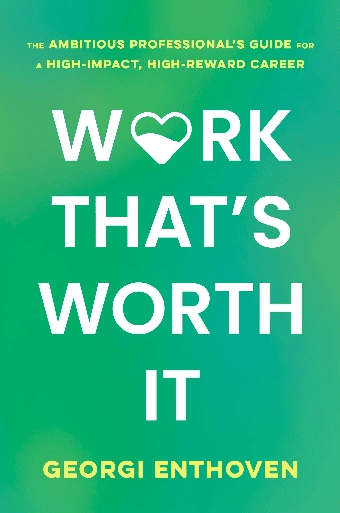
Ready to love your Mondays? Buy ‘Work That’s Worth It’ now – Amazon, B&N, Bookshop.org OR, need more convincing? Get the first chapters FREE here.
SHARE THIS EPISODE


01 July 2025
SEASON 1, EPISODE 32
Show Notes
In this honest conversation, she reveals what nursing school won’t tell you, how nurses survive financially in expensive cities like San Francisco, and why her profession has something most corporate jobs lack – genuine support systems and true work-life boundaries.
Nika explains why nursing offers both deep meaning and financial stability, what it’s like to be someone’s advocate in their most sacred moments, and why after nearly three decades, she still feels privileged to touch so many lives.
Ever wondered what it takes to build a career around genuine human connection, this episode will show you what that looks like in practice.
Key Points From This Episode
- Nika comes from a family of nurses (mother, sister, aunt, niece) – nursing is “kind of like in our DNA.”
- A high school field trip to a family birthplace sparked her calling to obstetrical nursing 27 years ago.
- Modern nursing requires a competitive Bachelor of Science in Nursing (BSN) program with hundreds applying for limited spots.
- Labor and delivery nursing is “like an ocean – you never turn your back on it” requiring constant alertness for life-and-death situations.
- Nurses serve as “eyes and ears” for doctors, interpreting fetal monitoring and advocating for babies during the most vulnerable moments.
- Teamwork is essential – 150 nurses work as a tight-knit family with buddy systems and emotional processing retreats.
- Continuous education is mandatory: 40 hours every two years plus Advanced Cardiac Life Support and Neonatal Resuscitation certifications.
- San Francisco offers competitive wages due to unionization, with 6-8 weeks paid vacation and true work-life separation.
- The emotional reward comes from “touching so many people’s lives” during birth, though difficult cases like baby losses are “etched into who you are.”
- Technology is rapidly evolving with innovations from unexpected sources like Cal Poly students developing FDA-approved obstetrical devices.
Links Mentioned in Today’s Episode
California Nurses Association (CNA)
Advanced Cardiac Life Support (ACLS) certification
Neonatal Resuscitation Program (NRP)
Transcription
Nika: [00:00:00] You definitely can’t have like a day where you might just wanna like sit in your cubicle and zone out. Those days don’t exist in nursing. Yes, you have to. And I feel the older I get, like I’m like going to bed earlier, I can’t kind of bounce back into it like I used to. So when you show up, you’re all in.
Georgi: Did you know the average person will work 90,000 hours in their lifetime? I. What if you could use those hours to find fulfillment and become a disruptor for good? Welcome to the work That’s Worth It. Podcast. I’m Georgi Enthoven, and I’m here to demonstrate that an ambitious, meaningful, and rewarding career is not just a dream.
Georgi: It’s achievable. Each episode will dive into conversations with global change makers who cracked the code on computer. Binding income and impact. If you’ve ever felt like you were torn between a paycheck and your purpose, or maybe you simply yearn for more purpose, you’re going to be exposed to the ambitious humans who have done it [00:01:00] themselves ready to make your work worth it.
Georgi: Let’s get started.
Georgi: Today, I have Nika Claes Terjesen on the show, and her story represents something we. All learn to value in a whole new way during COVID, the critical impact that essential workers have on our society. Nika is a native San Franciscan who has spent 27 years as a labor and delivery nurse at California Pacific Medical Center.
Georgi: She earned her BSN from Dominican University in San Rafael, California, and comes from a family of registered nurses. It’s literally in her DNA. Listen in to see when Nika knew that nursing was for her and how conscious she is regarding the responsibility of what her work entails every day. She literally holds people’s lives in her hands during their most vulnerable moments.
Georgi: In a world where so many people struggle to find work that feels [00:02:00] purposeful, Nika wakes up every morning, assured that her work matters. She meets new life as it enters the world. Advocates for babies who can’t speak for themselves and supports families through the moments that will define their entire lives.
Georgi: Mika’s Insights will show you what nursing looks like in practice. I. Nika, lovely to have you on the work that’s worth it. Podcast.
Nika: Well, thank you for having me. I’m looking forward to chatting with you today.
Georgi: Yeah. Well, I am really excited that we are gonna get to jump in and talk all things nursing, and you’ve just come off a shift and I would love to hear where you’ve come from and what have you been doing today.
Nika: Yeah, well, I started my day, waking up at five 20 this morning and having a little cup of coffee and driving over to 1101 Van Nus Street in the heart of San Francisco. I start my day walking into the building and kind of not knowing exactly what’s coming my way, but. [00:03:00] I feel touched that I met three beautiful newborn babies today.
Nika: I walked outta the building a little lighter on my feet and feeling grateful for some new little additions into the world.
Georgi: Yeah. What an amazing opportunity to meet new life as it comes into the world.
Nika: It really is. I feel really blessed.
Georgi: Yeah. I am really interested, as you know, the. Podcast is called Work That’s Worth It.
Georgi: And I would like to know a little bit more about your background in nursing and how you chose it in the first place. This, uh, nursing as a career.
Nika: Yeah. I come from a family of a lot of nurses. My mom, my sister, an aunt. My niece just finished nursing school. It’s kind of like in our DNA, but you know, I wasn’t a hundred percent sure when I.
Nika: I was in high school, I went to an all-girl high school in San Francisco, and I had a teacher that took us on a field trip to the family birthplace. [00:04:00] And I feel like there’s a stigma about hospitals where people feel scared and nervous, and it’s not always the place you wanna be. And we took a tour through the family birthplace, which was historically what we call it, an LDRP, which is labor, labor delivery, and recovery, and postpartum phase.
Nika: I was blown away by these nurses rocking babies and just seeing such a brand new baby. ’cause you don’t get to see that every day. Yeah. It’s kind of a really special moment and usually people have a baby and they kind of go into hibernation and figuring out how to deal with a newborn. So it was kind of a really special moment when I was a senior in high school.
Nika: When you’re trying to figure out what you’re gonna do and with your life and in. What directions you’re gonna go. I decided to apply based on that field trip my senior year to nursing school. Yeah. And saw, kind of see where it would take me.
Georgi: That’s so interesting that you have many [00:05:00] family members in nursing and, um, probably even though you had, I’m sure you had spent some time in hospitals growing up, visiting your mom and, but having that emotional connection where you got to really see something that called you.
Nika: Right? Definitely. Definitely in nursing school, I feel like it was the place that when I. Went through that rotation. It just had an overwhelming feeling of kind of, this is where I needed to be.
Georgi: Yeah. So you felt pretty confident from the start?
Nika: Definitely. It was a little bit of a journey though. ’cause sometimes, you know, you, there’s buzz like, oh well you need to do floor nursing before you go into a specialty.
Nika: But I just, I just. Really hustled to see where I could work with babies. ’cause I just, I love ’em. Okay.
Georgi: Okay. So I don’t know anything about nursing school or the choices you need to make, but I do understand that this is something that you have to declare early on and usually you’re accepted into a university, [00:06:00] into a nursing program and would love to hear your take on, you know, how that works.
Georgi: Even coming from undergraduate, you know, well from high school into right undergraduate. Of health studies. Right. You know?
Nika: Yeah. It’s kind of interesting ’cause I’ve just started my 27th year as a labor and delivery nurse, but when I was a new nurse, the mentors and the very seasoned nurses that kind of really, I.
Nika: Help mold and shape your career. It’s one of these professions. You have to kind of be there and embrace it and be present to really see the, um, ups and downs of what can go on. I, I describe obstetrical nursing as kind of like an ocean. You never turn your back on it. You always have to catch the waves so you don’t miss something and your seasoned nurses kind of mold and.
Nika: Help you prepare for your career and you need, you need those lifelines around you. ’cause it’s definitely not necessarily [00:07:00] like a solo practitioner kind of world. And the nurses that are, you know, historically there were nurses that had worked in the military or had on the East coast, they kind of had more of a diploma program.
Nika: The standard. Now they don’t have those programs so much entering. They mostly want you to have a bachelor’s. Of science and nursing, which is called A BSN. So that’s a little bit different now. The nurses coming into the profession now
Georgi: applied to it. So you do A, B, SN and then what ha and how many years is that?
Nika: When you go to a four year college that has a nursing program, you have to first apply and it can be a little bit competitive now because there’s only a certain amount of spots. Mostly because the, the preceptorships that require are. Part of your clinical. And so you are doing your undergraduate in anatomy, chemistry, physiology, along with your undergraduate of math, English.
Nika: And then as your senior year [00:08:00] approaches, you do like your public health and you usually pick a preceptorship in an area that you might be interested in. You have to be able to find a person that’s willing to kinda work with you
Georgi: for your hours to guide, hours to guide and, and obviously a hospital that is close.
Georgi: Um, that you can access.
Nika: That’s true. Yes.
Georgi: Yeah. ’cause I think a lot of the smaller universities in the US that are not by a major city, may not have a hospital and therefore don’t offer nursing programs. Right. When you look up
Nika: cer, like, I think anywhere from USF to Dominican to San Francisco state, to Sonoma State.
Nika: All have nursing programs, but like if any of these colleges you look at, usually they’re impacted and so they can get hundreds and hundreds of applications. And so, um, it’s not always easy and sometimes people have to reapply. When they don’t get in.
Georgi: Yeah. Yeah. Okay. So nursing, and it sounds like there’s an [00:09:00] oversupply of people interested in coming even into the programs.
Georgi: What is nursing offering that is so compelling to people that want to join these programs?
Nika: I think there’s a couple of things. I think you come out having a job where you know, you don’t have to start off maybe. I mean, you might have to start off on night shifts, but you, you jump into your career that you’re gonna nurture through time, but it’s not like you have to climb a corporate ladder,
Georgi: for example.
Georgi: Okay, so this, it’s more like a known, your path is more obvious. It’s more known of what it’s going to take from you, and so it’s easier maybe to commit to a program and are there jobs on the other side? It’s
Nika: funny because. You hear this buzz that there’s a nursing shortage and while there are from state to state, it’s very different.
Nika: Some. States are unionized nurses. Some states are non-unionized nurses, [00:10:00] and so on the coast, especially Northern California, San Francisco in particular, and New York in particular. Because of the cost of living, the compensation is a little bit higher. And so we often get nurses that might come from Mobile, Alabama, for example.
Nika: You make a fraction of what you would make in San Francisco, but it’s a cost of living adjustment too. But we get a lot of folks that come from Texas, Florida, different states primarily because of unionized nursing.
Georgi: Okay. Okay. And what. Qualities do you have like your unique gifts that make you a really great nurse that has been obviously, um, doing this for 27 years?
Nika: Oh man. Maybe it’s hard to
Georgi: talk about, but part of, part of what I love to do is, you know, help people own their gifts and so you can talk about it and also, you know, understand exactly what our weaknesses are [00:11:00] too.
Nika: Well, it’s an interesting, you know, I, when I walk through the door. To meet my patient, you go from not knowing somebody at all to being in their most vulnerable moment.
Nika: You’re with a person and it, it changes everything about the relationship. You’re at their most vulnerable moment, whether it’s for my end birth. Some people work in nursing where it’s death, but these are moments. That change people’s lives.
Georgi: Yeah. Yeah. Um, you’re there
Nika: to witness and it’s, I feel very privileged to be able to be in these moments.
Georgi: Yeah. I mean, I think that’s exactly before you said the word privilege is how, what I’m reading from you is like, you feel that that is part of the gift of what you’re getting is to be with people when they’re most authentic, raw, honest. Yeah. Cha maybe challenged.
Nika: Yeah. And I always say labor and delivery is an interesting place because.
Nika: You see people at their [00:12:00] worst and best moment, it’s to go through labor is not an easy chore, and you’re gifted with this beautiful. Yeah, person that changes your life.
Georgi: And so what a requirement of somebody to do the kind of nursing you do is to be able to hold sacred those moments or to be there for the whole range of emotions to make people feel safe.
Georgi: What are, yeah, I think I’m guessing at those, but all
Nika: those things, I mean those, you nailed it. That’s exactly it. And you know, they’re not, it’s not always picture perfect and the days can be filled with chaos, beauty, all those things. But I think at the end of the day and at the end of my career and when I’m.
Nika: An old lady, I’ll look back and think I’ve touched so many people’s lives, and what more could you ask for?
Georgi: In this show, I focus on the different [00:13:00] impact and or what I call in my book at least, is contribution. What is the contribution that you want to make and, and then how can you be rewarded for that contribution?
Georgi: And some careers really have very limited contribution and people are very focused on the income aspect, which maybe they need to be at a particular time. But it sounds like your job. Is, um, so much of what you do is grounded in the impact you can have. What about that is important to you?
Nika: Well, I, I like people.
Nika: I like meeting new people. I like helping people. And I just, if I can look back on my career in my life and if I’m on my death bed one day and I know that I’m gonna have touched so many people’s lives and. I feel like at the end of the day, that’s all worth it.
Georgi: Yeah. Yeah. And the emotional toll for caring other people emotionally during their time of birth, good and bad.
Georgi: How do you manage that?
Nika: I know that’s a great question [00:14:00] because you can have a slew of very easy people and easy days and straightforward, and you can have the next week, it can be chaos, you know, it’s also, it doesn’t happen often, but it is. Really hard when somebody loses a baby. And, um, you know, of all these years we’ve had maybe two maternal deaths.
Nika: It’s, you know exactly where you were when that situation happened and you don’t forget it. These moments and people are kind of etched into who you are.
Georgi: Yeah. You’re on their, their journey has merged with yours.
Nika: A hundred percent. Yeah.
Georgi: Yeah. So what do you need to do to take care of yourself in a, a job such as what you do?
Nika: I think we have 150 nurses on staff. We have, we’re like a family. We kind of process and have therapy sessions together to, you know, ’cause we’re kind of in the trenches together. So we have a really [00:15:00] tight knit, we have our work family. I love coming home and talking to my family too, and I love talking to my sister who’s a nurse.
Nika: We do different types of nursing, but it’s a little bit of the same story in a different realm.
Georgi: Okay. But being able to, um, hold your coworkers emotionally is also part of the role that you play? Yeah,
Nika: yeah. I actually, we just started having a retreat. Recently at work, and it’s a night away and it’s a, a nurse, a retired nurse who ran for chemo, patients who were kind of terminal.
Nika: And they’ve implemented this to kind of help kind of process, kind of the, the raw emotions we go through every day and kind of acknowledge it and. Share with each other. I think sometimes when you share the journey with other people, it kind of validates the highs and lows of the work we do.
Georgi: Yeah. And in the work that you [00:16:00] do, how important is collaboration?
Nika: Oh, a hundred percent. It’s a little bit like, I equate it a lot to a pilot on an airplane because you, when you board the airplane, you wanna know that the two pilots. Are talking and that are gonna get you there safe.
Georgi: Okay. And the pilots are the doctors?
Nika: Yeah.
Georgi: Okay.
Nika: Yeah, the doctors and the nur, uh, you know, the, it’s the collaboration of the team.
Nika: Okay? Okay. You need your, you need your physician, you need your, your bedside nurse who knows you and who’s like monitoring your labor, the baby’s wellbeing. There’s an art to. Understanding and interpreting. Fetal monitoring, the baby tells us how they’re doing by understanding that tracing. So I know if I have a good baby based on a reactive strip or I know if I have a baby that needs help, I’m the eyes and the ears for the doctor and it’s my job to advocate.
Georgi: Okay. Let’s talk about the responsibility of [00:17:00] this job. It sounds like, um, what you’re just telling me, I can just feel the weight of you’ve really, you. You can’t have an off day, you have to be fully present, engaged, well rested to show up in times of birth as you’re talking about representing the baby. So what is that like?
Nika: Well, you definitely can’t have like a day where you might just wanna like sit in your cubicle and zone out. Those days don’t exist in nursing. Yes, you have to. And I feel the older I get, like I’m like. Going to bed earlier, I can’t kind of bounce back into it like I used to. So when you show up, you’re all in.
Nika: You’re not alone. We know the way that we work together, we are all kind of keeping an eye on our fetal monitoring strips. Like if there’s a problem, we’re all kind of in it together where, you know, we have each other’s back like, Hey, are you okay? Like, I’ve got you. If there’s a problem in a room that you have like a [00:18:00] buddy system.
Nika: So you really are, it’s such a collaboration. It’s not an independent person type of job.
Georgi: I mean, the world you’re describing is so different from anything that I’ve experienced in the corporate world. So I can’t imagine in an office environment people saying, are you okay? Like, I’ve got you. We covered. I think often people have to show up in those jobs and pretend that everything’s fine, but for the stakes are just a lot higher in what you’re doing, and so that communication is really important.
Nika: A hundred percent. Yeah, a hundred percent.
Georgi: What do you wish you had known before entering nursing as a profession?
Nika: Uh, I kind of thought I would be sitting rocking babies and like feeling their soft, cashmere skin. I didn’t really realize that there are always life and death moments and you just have to be on your toes and always.
Nika: Just paying attention to all the signs and messages around you. [00:19:00] There’s a lot of constantness to it, but you get a lot of reward for it.
Georgi: Okay, so it’s like your nervous system is always on alert.
Nika: Yes.
Georgi: Yeah. And somehow you seem like such a calm, peaceful person.
Nika: It takes a little bit. It took, I mean, two years in, I still, I mean, even now you, there’s always.
Nika: If there’s a issue, you can, we always collaborate with each other and like, Hey, what do you think? Like if you’re looking at this, do you think this is what? Is this what you would be doing? You know, so we bounce off each other.
Georgi: Okay. The other part of my show really sort of focuses on. The reward that you get from being a nurse, and we talked about some of the emotional rewards of holding the babies, bringing life into the world.
Georgi: Don’t need any specifics, but just wonder what it’s like on the income front of how do you, is nursing a livable wage in San Francisco or a [00:20:00] major city in the us?
Nika: Right. That is a very interesting question. I feel like I look back, I, you know, I have the old pay stubs from when I first started, and sometimes I look back and I’m like, wow, I’ve come a long way.
Nika: But it is interesting because when I started nursing, it was before like the tech boom in San Francisco. So the nursing job is kind of like, it’s a little, it, it’s always steady, steady and stable. And there are these. Income increases based on our contract that we kind of CNA, which is a California Nurses Association, kind of holds a hospital kind of accountable for giving living wages.
Nika: And as you’ve been there a certain amount of time you get, you know, like your 10 year bonus. It’s not like a tech bonus, but you get nice help, benefits, you get a, you get a nice. You get six to eight weeks off once you’ve been there for a while. Gosh, if you’ve been there five years, I [00:21:00] think you get six weeks off and it’s a paid vacation.
Nika: And the one beauty of that is when you go on vacation, you are off.
Georgi: Yeah, no, nothing’s piling up on your desk. There’s no, no. The babies aren’t
Nika: waiting for you. No. And I’ve been on vacation with friends who are freaking out like, oh my God, I have to answer this email. And I’m like, what? I am. There is a beauty to that, that maybe if you haven’t ever worked in the corporate world, you wouldn’t know that is a gift because you can really embrace your vacation.
Georgi: Yeah, yeah. I mean, sounds like one of the things you’re also highlighting is in a city where, like in San Francisco with the tech boom, salaries are really high and the cost of living has changed significantly probably from when you started, and so that does make it more challenging to have an essential.
Georgi: Job?
Nika: Yes, it does. I mean, there are ways, and we get people that come here. Some of the younger nurses now have roommates. We get a lot of travel [00:22:00] nurses. They like to come here because I think San Francisco in particular is an area where there’s pretty good compensation for nursing. So I, I think it’s definitely a livable city.
Nika: You might not get to do everything you want, but I do think it, it is a fair, generous compensation in the nursing world.
Georgi: And having spent already 27 years doing this, what excites you about the future?
Nika: Oh, let’s see. Well, the technology has changed a lot and it is interesting. I, I love seeing the, I call ’em the young, younger generation coming in, having babies.
Nika: These are the, they’re kind of like the tech savvy. They know more about tech than some of the more seasons nurses, and they’re just, they kind of have technology and information on their fingertips, so it’s kind of nice to embrace like [00:23:00] a next chapter of. The new generation of young moms and dads having babies.
Georgi: Yeah. So they’re very aware of the options they have, the possibilities for birth, uh, what can go right, what can go wrong. And they’re very informed.
Nika: Very informed. Yes.
Georgi: Yeah. Yeah. And so are you finding that part of your job is adapting to new technologies and change, or has, do things sort of mostly stay the same?
Nika: For a long time, things stayed the same, but they were changing so quickly now way, way quicker than they did for the decades prior. I’d say in the last five years there’s been crazy innovation. There’s like new devices that OB doesn’t have a ton of devices like you would find in orthopedics, but we had some Cal Poly students recently.
Nika: They had designed an obstetrical product. For uterine hemorrhage, and it kind of went [00:24:00] dormant a little for a little bit, and then some more students. Brought it to the FDA and it got funded. And so it’s so cool to see a new device from like a California state school that we use every day and is being used globally now.
Nika: Um, so That’s so
Georgi: interesting. Yeah, it’s really
Nika: cool.
Georgi: So you get to work with students and actually give them feedback on the devices that they’re developing and think to solve the problem. I’m like, why can I
Nika: think of that?
Georgi: Well, maybe they need you on their board.
Nika: I know as a, it takes people to think outside the box a little bit though, you know?
Georgi: Yeah, yeah. When you’re in it all day, it’s, it’s hard to imagine what you may need, but to think of it from the outside, oh my gosh.
Nika: We used to use these for C-sections, these like old school retractors that they use in every surgery, and somebody came up with this simple rubber, rubber like a rubber.
Nika: Circle that folds and it’s, that’s the only thing we use now for our C-sections.
Georgi: [00:25:00] Okay. So it sounds like also your industry is really open when there’s a tool to be developed that is testing well and is helpful that you, you’re open to adopt new technologies and new ways of being.
Nika: Yeah, definitely.
Georgi: Yeah.
Georgi: Is there training that happens all throughout nursing? Like, I know you’re obviously learning on the job, but is there, are there legal requirements of having to continually keep your license current?
Nika: Yes. Once you have your registered nursing license, there’s um, continue, you need like 40 hours every two years.
Nika: My department, it’s advanced Cardiac Life Support, which is. ACL S, which is like a cardiac kind of rhythm for like maternal situations. If someone were to be non-responsive, we have a neonatal resuscitation, uh, requirement, and then we have kind of e-learning projects all the time too. We have competency camps where we go and do mock hemorrhages and [00:26:00] mock all the situations that can arise at our emergencies.
Nika: We kind of. Practice them altogether and then we kind of debrief and figure out like how could we have done that better? Like how can our communication be more efficient just so we don’t end up in situations that we have a poor outcome.
Georgi: Yeah. Wow. I’m thinking of so many of your stories could be used in the corporate world so well to to actually like test some of the difficult situations that come up and how does the team work together and then give feedback is amazing.
Nika: Right, right. Yeah.
Georgi: Well, this has been such an interesting and insightful conversation. You’re very different to most of the guests that I have on the podcast, and I know very little about nursing other than how much I have treasured nurses in any hospital experience that I’ve had, including giving birth to three children.
Georgi: So I’m just really grateful to be able to learn more from you and understand what it takes to be a nurse and or [00:27:00] your particular kind, and also just to be in your presence. You have such a. Warm and comforting way of being. Aw.
Nika: Well, thank you. I appreciate that and I hope that I showed a little bit of my world into.
Nika: Your podcast. Yeah. So you can kind of see the beauty of nursing.
Georgi: Yeah. What would be your last piece of advice for people considering being a nurse?
Nika: I think you’ll never regret it. I think that it’s a touching, beautiful profession and we need the younger generation to continue cultivating people will always need somebody to take care of them, and it’s really a beautiful, it’s been a beautiful profession.
Georgi: Yeah. Yeah. Well thank you so much for sharing and lovely to have you on the podcast and look forward to keeping in touch.
Nika: Yeah, thank you for having me.
Georgi: Okay. Take care. Okay, you too. Let’s talk about a couple takeaways from this episode with Nika. First. [00:28:00] Ideally, essential work comes with essential support systems.
Georgi: What caught my attention about Nikas story is how nursing has built in structures that many other professions lack when she describes her extended nurse work, family processing difficult cases together. The camps where they practice emergency scenarios and the buddy system where colleagues genuinely ask, are you okay?
Georgi: And I’ve got you. This is what meaningful work actually looks like. It’s not just about the individual purpose, it’s about being part of a profession that recognizes the emotional and physical demands of the work and create systems to support people through it. If you’re considering essential work, look for fields that have invested in these kinds of support structures.
Georgi: Also, the second takeaway is true work life balance means complete separation. Nikas description of being truly off when she’s on vacation, meaning no emails piling up, no babies waiting for her, reveal something profound about different [00:29:00] types of careers. While corporate workers often struggle with boundaries and being always on, even on the beach, nursing offers something rare.
Georgi: When you clock out, you com, you’re completely done. The work is intense and demanding while you’re there, but it doesn’t follow you home. For people seeking both meaningful work and genuine downtime, consider careers where the work naturally contains itself. Where being fully present during work hours earns you the right to be fully absent during time off.
Georgi: And that’s a wrap for today’s episode of work That’s Worth it. Remember, every conversation we share is designed to empower you to build a career that’s truly worth your time and energy. There are future disruptors out there just like you, who would appreciate the conversations in this podcast. Please support me by spreading the word and sharing this episode with a friend or two, or visit my website@georgienthoven.com.
Georgi: That’s spelled [00:30:00] G-E-O-R-G-I-E-N-T-H-O-V-E_N.com. Until next time, ask yourself, what problems am I solving and are they worth my valuable time? Your intentional choices today can lead to exponential impact tomorrow. Thanks for listening.


GET GEORGI'S BOOK
Meet Georgi Enthoven
As the visionary founder of Work That’s Worth It, Georgi specializes in unearthing the unique inspiration and career desires of those seeking significance both for themselves and for the world.